Boxbollen: How Jacob and Victor Eriksson Turned a Reflex Ball Into a Global Fitness Brand
Jacob and Victor Eriksson grew up in a suburb of Stockholm in a competitive, athletic family. Victor played soccer professionally, often as a team captain, and is generally described by people who know both brothers as the more disciplined, detail-oriented of the two. Jacob is the more vision-driven and direct of the pair. By their own account, the brothers talked for years about eventually starting a business together before actually doing it, which is a common enough pattern among sibling founders but one that gave them a working relationship they had effectively been rehearsing for most of their lives.
The idea for Boxbollen traces back to a video Victor came across of someone using a tennis ball on a string, worn on a headband, to practice reflexes and hand-eye coordination. The brothers built a rough prototype using a softball and a headband and worked with manufacturers in China to develop it into a real product. They launched it for the 2018 holiday season in Sweden, planning conservatively for around 1,000 units. They sold roughly 3,000, a clear signal that demand was outpacing what they had planned for and an early sign that the product had broader appeal than a niche training tool for athletes.
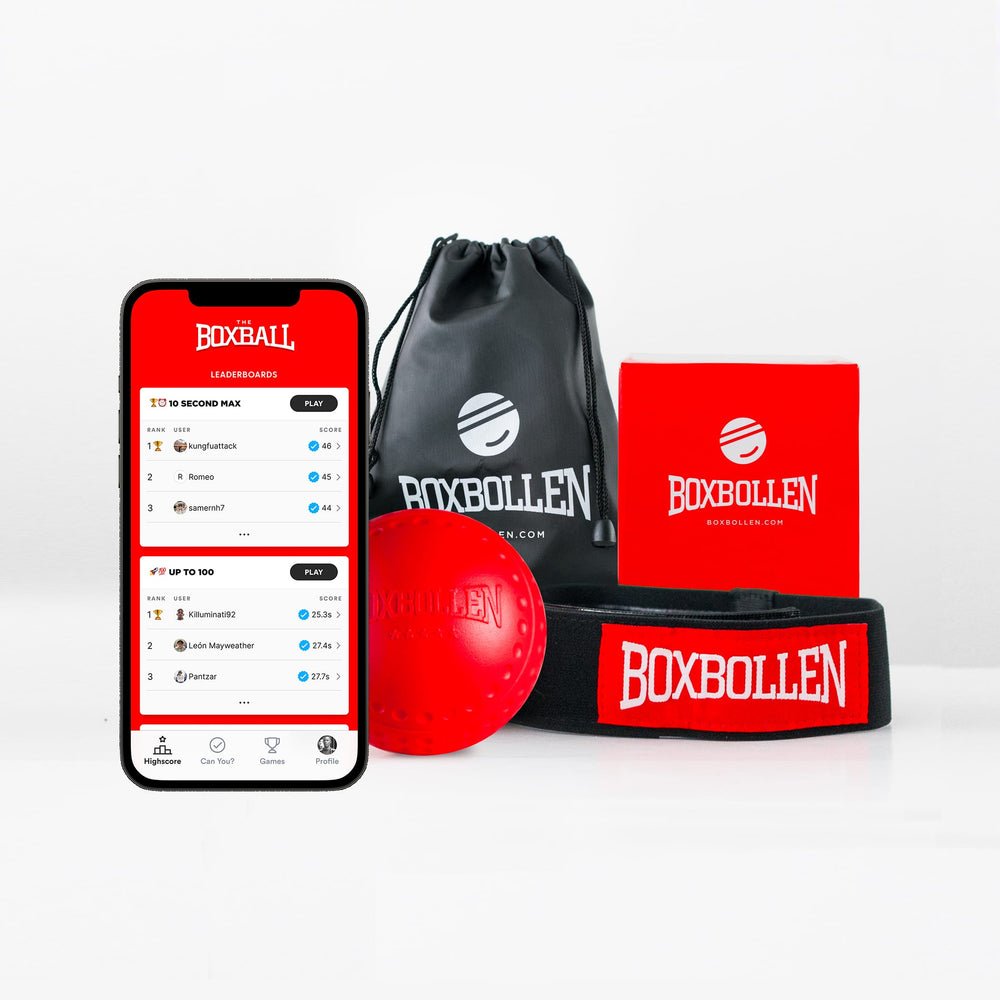
The current product is a small ball attached by an elastic string to a headband, paired with a companion app called Boxball that turns the physical training into a game. The app tracks reaction time, runs challenges, and lets users compete against each other in something the company calls live battles. A single Boxbollen sells for around 30 dollars, with the per-unit price dropping toward 20 dollars when bought in a 10-pack, and the brothers have since introduced a soccer-focused version called Footbollen at a similar price point. The product is sold both direct-to-consumer through the company’s own site and through retail partners, with the company citing placement in thousands of stores in the United States, including big-box retailers.
The revenue figures attached to Boxbollen vary depending on the source, and none of them are independently audited, so they should be read with real caution. One industry recap of the founders’ own interviews put fourth-year revenue at roughly 36 million dollars and fifth-year revenue somewhat lower, around 30 million dollars, with a sixth-year projection near 70 million dollars. A separate business press report citing the company put 2024 revenue at roughly 59 million dollars with about 5 million dollars in profit, and described combined revenue of more than 100 million dollars across the two most recent full years. Those two sets of numbers do not line up cleanly with each other, which is common when a private company’s figures come from founder interviews at different points in time rather than from a single audited source. What is more consistently reported is that the company has stayed lean, with the founders describing a core team under ten people even as revenue scaled into eight figures, and that marketing spend, including significant money spent on partnerships with well-known athletes and public figures, has been a major driver of growth.
Reflex-training balls are not a new category, and Boxbollen competes with a number of lower-priced entrants that sell a similar physical product, including brands like TEKXYZ and various generic versions sold through marketplaces, along with established combat-sports equipment makers who have added reflex balls to broader product lines. Boxbollen has mostly avoided competing on price. Instead, the brothers have leaned into gamification through the Boxball app and into celebrity-driven marketing, with reported partnerships and paid content involving high-profile athletes and public figures, and marketing budgets that by the founders’ own account run into the millions of dollars annually. The strategy produced significant organic reach as well, including viral attention on platforms like TikTok, and by the company’s account the product has been used by several million people worldwide.
Swedish press coverage has also reported that the brothers turned down an acquisition offer in the range of 350 million Swedish kronor, choosing to keep building the company independently rather than sell at that valuation. Whether that was the right call is impossible to know from the outside, but it fits a pattern of a company that has generally chosen to reinvest in growth, including new product lines like Footbollen, rather than take an early exit.
On Starting Small, Jacob and Victor talked with host Cameron Nagle about what it was actually like to go from a holiday-season product launch in Sweden to a company selling internationally, including how they decided when to lean harder into celebrity marketing and how they think about the tension between rapid growth and staying a lean, founder-run team. They also discussed the decision to turn down a nine-figure-kronor acquisition offer, and how working as brothers, with all the shorthand and occasional friction that comes with it, has shaped how they run the business day to day.
Boxbollen is a useful reminder that a genuinely novel product category does not have to be complicated. A ball on a string is a simple idea, and simple ideas are easy to copy, which is exactly why the brothers appear to have focused so much of their energy on the parts that are harder to copy: the app, the brand, and a marketing engine built around recognizable names. Whether the company’s growth numbers land closer to the more conservative or more ambitious figures reported in the press, the underlying story, two brothers turning a prototype built from a softball and a headband into an international retail brand in under a decade, is a straightforward one worth hearing directly from the people who lived it.