He Left Bose After 22 Years With the Rights to a Discontinued Product. Now It’s a CES Award Winner
N.B. Patil spent 22 years at Bose, joining as a firmware engineer in 2000 and eventually leading engineering and business development for new consumer-electronics concepts — work that ranged from adaptive cruise control to the Bose Connect app. Along the way he was directly involved in Bose’s original Sleepbuds program, a pair of tiny in-ear earbuds designed to help people sleep through noise rather than just cancel it. When Bose decided to exit the sleep-audio category and discontinued the product, Patil didn’t let the idea die with it. He left Bose and, together with two other Bose veterans who had worked on the same program, Brian Mulcahey and Charlie Taylor, arranged to take the Sleepbuds research and intellectual property with him.
The three co-founded Ozlo Sleep in 2022 and spent roughly a year building the company quietly before emerging from stealth on August 3, 2023, with a $10 million Series A led by LifeArc Ventures and ARTIS Ventures. It wasn’t a formal Bose spin-off — Ozlo started from scratch as an independent company — but it also wasn’t starting from zero: the founders had years of prior R&D on the exact problem they were now trying to solve commercially, without Bose’s brand recognition, marketing budget, or built-in retail relationships behind them.
Instead of leaning purely on the venture money, Ozlo went directly to consumers to prove demand. A Kickstarter campaign passed its $1 million goal within 17 days and finished with nearly 5,750 backers pledging over $1.4 million, then rolled into an Indiegogo InDemand campaign that added several million dollars more — by most accounts one of the largest crowdfunding campaigns the sleep-tech category has seen. That crowdfunded validation mattered: Sleepbuds finally shipped to paying customers in late 2024, more than two years after Bose had walked away from the same idea.
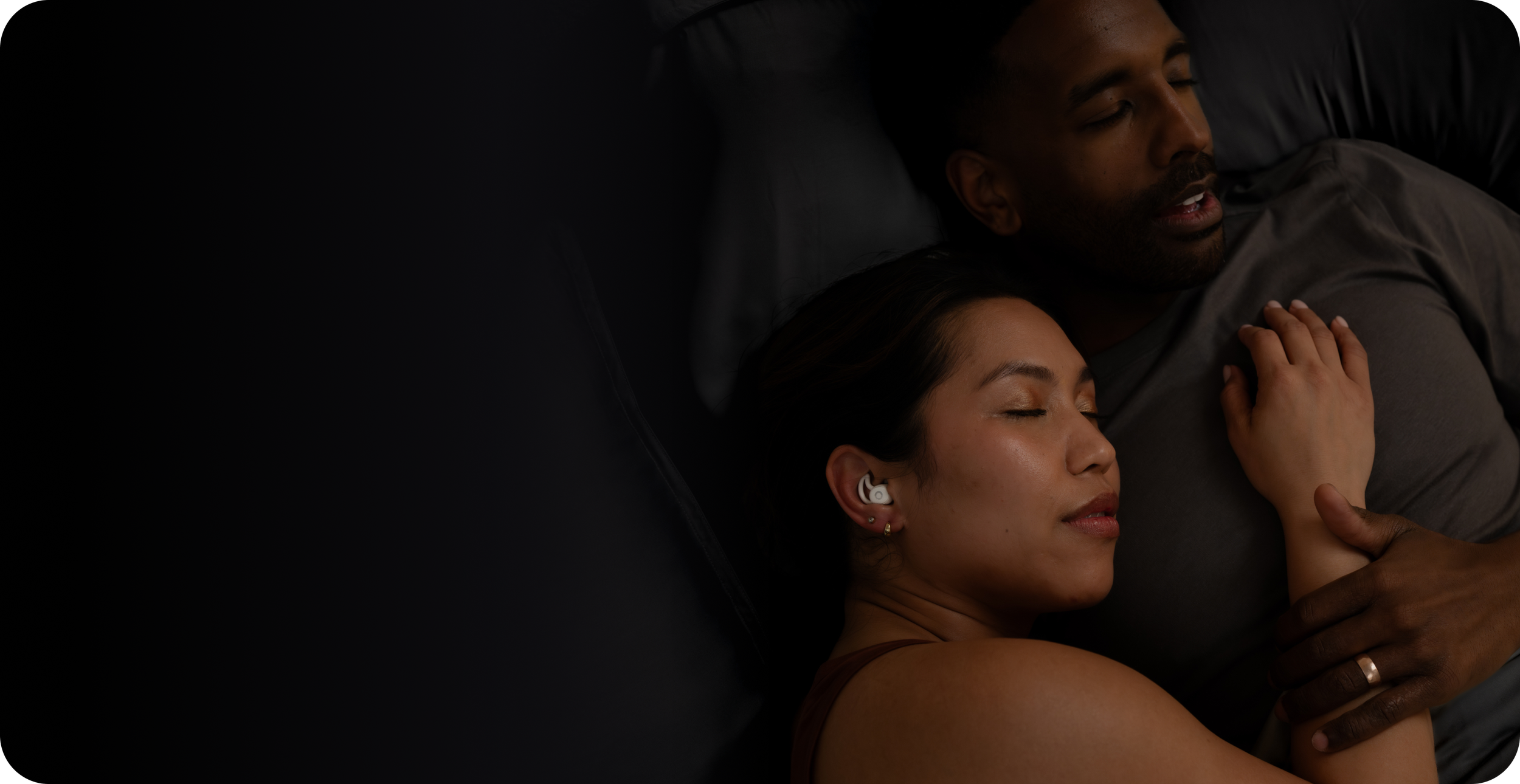
The product itself is small by design: the earbuds are about a quarter the size of typical wireless headphones, built to sit comfortably even for side sleepers pressing an ear into a pillow. They stream audio like music, audiobooks, or white noise over Bluetooth, then use accelerometers to detect once the wearer has actually fallen asleep and switch over to passive and active noise masking so the buds keep blocking sound through the night without draining the battery on active playback. The charging case doubles as an environmental sensor, tracking room sound, temperature, and light, with plans to eventually connect to smart thermostats. Bose’s original version of this idea had a real weakness: unreliable Bluetooth connections that frustrated early adopters. Ozlo built its own antenna design specifically to fix that complaint before its first product ever shipped.
The bet paid off in recognition, if not yet in an established revenue track record the company has publicly disclosed. By mid-2026, Ozlo said more than 200,000 customers across 40-plus countries had bought Sleepbuds, and the product picked up a genuinely unusual run of honors for a young hardware company: a CES 2025 Innovation Award, a spot on TIME’s Best Inventions of 2025 list, recognition in Popular Science’s Greatest Innovations, and a ranking from Fast Company as one of the most innovative companies in consumer electronics. The company has grown to roughly 60 employees and, as of a January 2026 interview, said it was in the process of closing a Series B round, though no completed amount or lead investor has been publicly confirmed.
Ozlo has also started building toward something bigger than a single product. The company opened up its sleep data through iOS and Android developer kits, and struck a partnership with the meditation app Calm that lets Calm measure whether its own content actually improves a user’s sleep, with revenue sharing when someone upgrades their Calm subscription through the integration — a bet that Ozlo’s real long-term value is the sleep data itself, not just the earbuds that collect it. In January 2026, the company acquired Segotia, an Irish neurotech firm building in-ear EEG sensors, to push toward a brain-sensing product targeted for 2027 and, eventually, a possible move into medical-device territory. In July 2026, Ozlo shipped Sleepbuds 2 at $279, up from the original $249, with a longer battery life, a redesigned antenna aimed squarely at the Bluetooth complaints that dogged the first generation, and new sensors tracking breathing and movement alongside sound, light, and temperature.
Ozlo is chasing a genuinely large and growing category. Sleep-tech devices are a multibillion-dollar global market, with most industry estimates putting current annual revenue somewhere in the $29 to $50 billion range depending on how broadly the category is defined, and wearables like Sleepbuds account for the majority of that spending. The bigger structural opportunity for Ozlo, though, is the gap Bose left behind: a major consumer-electronics company built the underlying technology, validated that people wanted it, and then walked away from the category entirely — leaving three of its own engineers to prove the idea could work as a standalone business. That’s an unusual starting position for a hardware startup, closer to picking up an abandoned product roadmap than starting from a blank page, and it’s part of why Ozlo was able to move from stealth to a shipping, award-winning product in roughly two years rather than five or six.
In this episode, N.B. walks through what it actually took to leave a 22-year career at a company like Bose, why he believed a product Bose had already given up on was still worth building, and how a small team without a household name competed for shelf space and press attention against much bigger, better-funded competitors.
Listen to the full conversation with N.B. Patil on Apple Podcasts
Make sure to check out Ozlo at: https://ozlosleep.com/
Check out my new book on Amazon: https://amzn.to/4kRKGTX
Sign up for Starting Small University to join our interviews LIVE and ask questions: https://startingsmallmedia.org/startingsmalluniversity
Visit Starting Small Media: https://startingsmallmedia.org/
Subscribe to exclusive Starting Small emails: https://startingsmallmedia.org/newsletter-signup
Follow Starting Small:
Instagram: https://www.instagram.com/startingsmallpod/
Facebook: https://www.facebook.com/Startingsmallpod/
LinkedIn: http://linkedin.com/in/cameronnagle