Heraclea: How Berk Bahceci Left Law to Bring Turkish Olive Oil to America
Berk Bahceci’s path to founding Heraclea started far from the olive groves of southwest Turkey. After studying law and attending UC Berkeley School of Law, Bahceci spent time working in antitrust law — a career track that had nothing to do with food, farming, or consumer products. What changed his direction was something almost mundane: grocery shopping in the United States and noticing that, despite Turkey being one of the largest olive oil producing countries in the world, there was essentially no recognizable Turkish olive oil brand on American shelves. Spain, Italy, and Greece dominated the category; Turkey, despite generations of production, was invisible to the American consumer.
That gap became the founding idea for Heraclea, which launched in the U.S. market in March 2023. Rather than start from scratch, Bahceci turned to his own family’s history: generations-old olive groves near Milas, in Turkey’s Muğla province, an area recognized under the EU’s Protected Designation of Origin system for its Memecik olive variety. Instead of licensing the family’s harvest to third-party bottlers the way most Turkish producers historically have, Bahceci set out to build a fully vertically integrated company — one that grows, harvests, mills, bottles, and ships its own oil rather than selling raw product to intermediaries who put someone else’s brand name on the label.
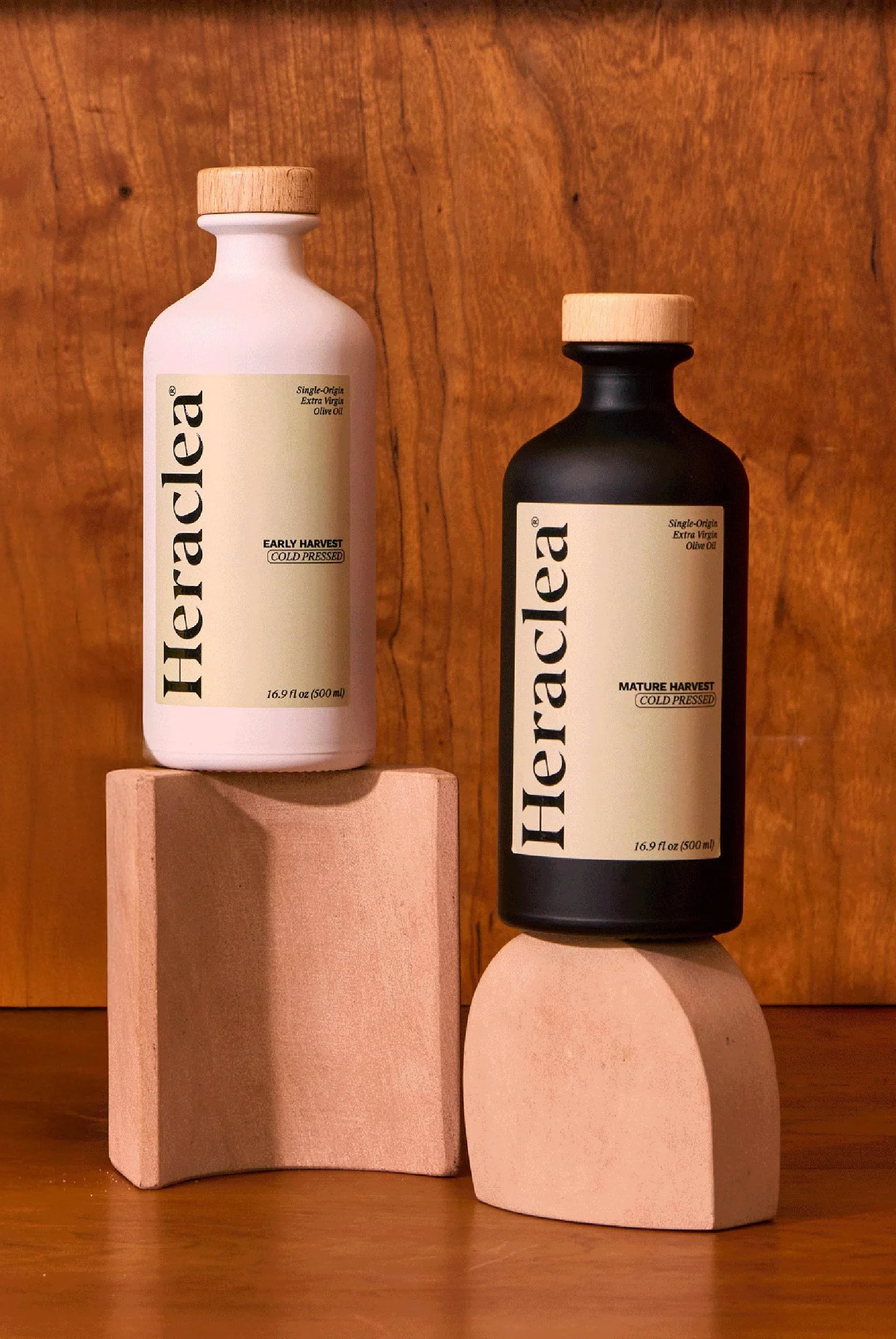
Heraclea’s product line centers on two single-varietal, cold-pressed extra virgin olive oils made from Memecik olives — an Early Harvest and a Mature Harvest — alongside a small collection of infused oils in flavors like garlic, chili, rosemary, and lemon, plus an “Everything Oil” blend. The company has been vocal about lab-testing its Early Harvest oil at roughly 450 milligrams of polyphenols, the antioxidant compounds associated with olive oil’s health benefits, positioning Heraclea alongside a wave of “high-polyphenol” olive oil brands that market freshness and chemistry alongside flavor. Bottles run in the range of $30 to $60 depending on size and collection, placing Heraclea firmly in the premium tier of the category, alongside other direct-to-consumer olive oil brands like Brightland, Graza, and Kosterina.
Heraclea has taken a deliberately unconventional financing path for a consumer packaged goods startup: the company says it has been entirely self-funded by the Bahceci family, turning down outside venture capital despite investor interest. No specific funding figure has been publicly disclosed, and the company has not released audited revenue numbers, so its financial scale is difficult to verify independently. Heraclea’s own marketing states the brand has served more than 20,000 customers to date, and the company says it now audits more than 20 partner farms as part of a fair trade program — both figures are self-reported by the company rather than confirmed by a third party, and should be read with that caveat. Estimates of the olive grove operation itself vary across press coverage, with some outlets citing roughly 100 acres of family land and others citing closer to 200 acres and 15,000 trees; the discrepancy has not been resolved in public reporting.
Heraclea is entering a U.S. olive oil market that industry researchers put somewhere between roughly $3 billion and $5 billion in annual size as of 2025, depending on the research firm and methodology, with most forecasts projecting continued growth over the next several years as consumers shift toward Mediterranean-diet staples and premium, traceable ingredients. The U.S. is now reportedly the world’s second-largest olive oil consuming market, having overtaken Spain in recent years, even though it produces very little of its own. That combination — high and growing demand paired with almost no domestic supply — is exactly the opening that direct-to-consumer olive oil brands like Heraclea, Brightland, Graza, and Kosterina have been racing to fill, each staking out a different origin story and flavor profile to differentiate from both mass-market grocery brands and each other.
The brand has picked up some notable press attention for a company its size, including a mention in a Forbes roundup of top-tasting olive oils and coverage in trade press like FoodNavigator, which has followed the company’s rollout of infused oil flavors and its pursuit of Fair Trade certification. Heraclea has also said it is pursuing status as one of the first Fair Trade certified olive oil companies, though the exact timeline and current certification status has shifted in public materials over time, and should be verified directly with the company rather than taken as a settled fact. As with many young food and beverage brands, Heraclea’s public story is still being written in real time — certifications pending, exact acreage uncertain, and financials undisclosed — which is itself a useful reminder that founder interviews capture a company mid-story rather than a finished one.
What makes Bahceci’s story a useful one for other founders is not that he left a stable legal career — plenty of people do that — but the specific way he chose to build a business around an asset he already had privileged access to: his own family’s land, history, and relationships in a region most American consumers had never heard of. Rather than inventing a new product category, he took an existing, high-quality product that had simply never been marketed properly to U.S. consumers, and built the brand, the supply chain, and the story around it himself. That approach — turning an overlooked inherited asset into a modern direct-to-consumer brand — is a pattern worth watching as more founders with immigrant or dual-country backgrounds look to their own family histories for their next business idea.