Stephen Preuss says PayMore's original store sat in what he calls a "class D" location, one he says the company would not approve for a franchisee today. He says it still did millions of dollars in sales, with strong local word of mouth and, by his account, without spending a dollar on outbound marketing. That store, in Massapequa, New York, is still the company's only corporate location, he says, and where PayMore spent about seven years refining its model before franchising.
In this episode of Starting Small, Preuss, CEO and Co-Founder of PayMore, walks through the full story: a Long Island upbringing, a short stint on Wall Street, a 2004 secondhand shop opened with a partner he was introduced to through a mutual friend, and the technology and test stores that he says came before franchising began in 2020.
This is the Stephen Preuss founder story, and the origin of PayMore, as he told it on the show.
Listen to the full episode: Starting Small on Apple Podcasts · Podbean · YouTube
Key takeaways from Stephen Preuss
PayMore started as a general secondhand store in 2004. Preuss says electronics became the store's top category by volume, dollars and bottom line several years in, and the partners rebranded as PayMore in 2011 around two goals: specialize in secondhand electronics and remove the stigma.
One store came first. Preuss says the team ran a single store for about seven years, building proprietary technology before expanding.
Test before you scale. Before franchising, PayMore opened locations in Brooklyn, Cary, North Carolina, and near Charlotte to see whether the model worked outside Long Island.
Technology does the heavy lifting. Preuss says automation lets stores run on three to four employees, compared with eight in the first store.
Customer experience was the second goal. Preuss says PayMore set out to remove the stigma around secondhand shopping.
His advice: take calculated risks early, but bake your idea before you push it forward, and consider restraint and patience.
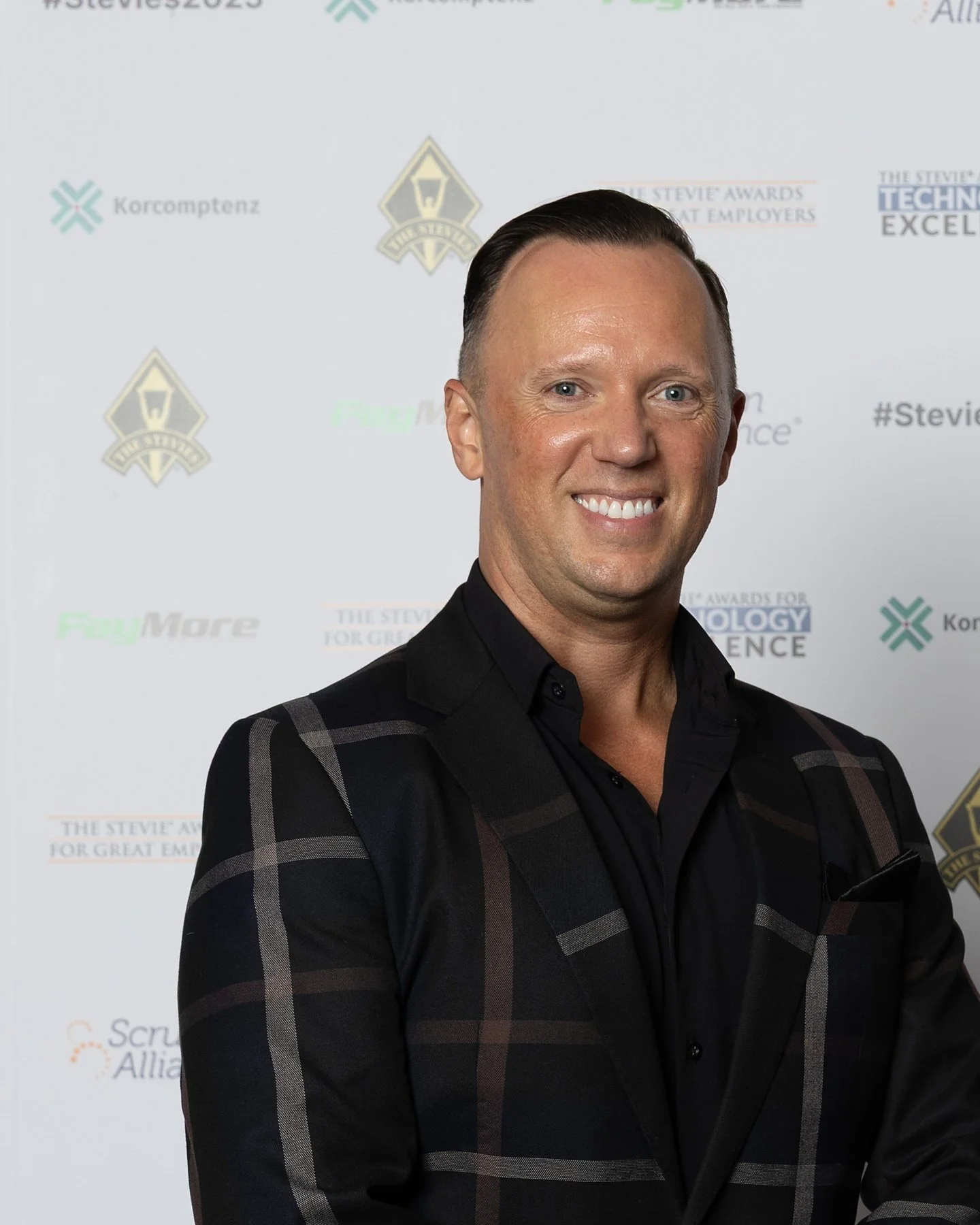
Photo: Matthew Hicks, courtesy of PayMore
A South Shore childhood
Preuss grew up on the South Shore of Long Island, the oldest of three boys, each about two years apart. They lived in a small house, so the brothers were very much in each other's business, he says. He describes a fairly normal childhood built around baseball and other sports.
His parents divorced early in his teenage years, which he says laid a foundation for being strong, focused and diligent. After high school he went to college in Florida.
From finance to Wall Street
Preuss says he knew he wanted to be in general business and build something bigger. He chose finance because he was good with math, numbers and modeling. By his second year in college his arm was done, he says, and he focused on business.
He started on Wall Street under a senior broker and says he did well for a couple of years. But he always wanted to own a business. After a couple of years he took the money he had at that point, which he says was not much, and began opening businesses: retail stores and a couple of restaurants. Within a few years he had several established locations and an opportunity to sell, and he took it.
Meeting Erik, opening in 2004
His next opportunity came through a mutual friend who introduced him to Erik Helgesen. Preuss says he knew that friend well, was actually the friend's neighbor and was originally working with the friend on the financial side. The friend told Preuss that Erik was a coder by trade with a great head on his shoulders, and that the two should partner. They met, in Preuss's words, inconspicuously, and ended up opening a business together.
It was a general secondhand store, around 2004, in Massapequa Park, Long Island. Erik also grew up in Massapequa. The store took in almost anything from the public, through consignment or purchase, and tried to resell it at a profit. Preuss says he likes to confidently say they did more wrong than right, and that between the two of them they made every mistake they could.
The electronics discovery
Several years in, around 2008 and 2009, the partners realized they needed to fine-tune the business. They were taking in everything, but electronics were suddenly very popular in the store. Preuss says it became their number one category in volume, dollar volume and bottom line. Customers liked buying secondhand electronics instead of paying thousands of dollars for a phone at a big-box retailer or an Apple store, and Erik's electronics background made it a natural fit.
The second lesson, he says, was about the secondhand world itself. There was a stigma attached to secondhand stores, and he says they were not places you would want your wife, girlfriend, mother or sister to walk into alone. The partners saw even then, almost 20 years ago, how important secondhand would become, and they decided on two goals: specialize in secondhand electronics, and change how secondhand was experienced by bringing it into an elevated retail setting. They repurposed the business in 2010 and rebranded it as PayMore in 2011.
Seven years with one store
PayMore moved its store into Massapequa, and Preuss says it is still the company's one and only corporate store, "believe it or not." He says it was their one store for roughly seven years. Erik ran the day-to-day operation, while Preuss brought a background in commercial real estate and capital markets. They did not know they would franchise a decade later.
Technology was the key piece. Preuss says that when they opened, there were no pre-owned buy-sell-trade electronics stores like this, no data, and nothing off the shelf for a CRM, point-of-sale system or operating system. Erik offered to build it himself. Preuss says the system that began as a skeleton is now a full, proprietary operating system that almost 80 developers work on. He says it reflects a 17-year build and that without that history it would be impossible to do what PayMore does. It was, he says, their number one investment.
Around 2017, Preuss says, they "picked our heads up" and realized they had something. The store was doing millions of dollars in sales from the "class D" location, with strong local word of mouth. He says it was giving cash to community members for products they no longer used, and keeping a lot of e-waste out of landfills. He says they had never spent on outbound marketing and still had steady repeat traffic, so they decided to expand.
A year of research, then three test stores
Preuss says he first thought about expanding on their own, but a Long Island company could probably reach only New Jersey or Connecticut, so they looked at the larger picture. They spent a full year, with their own work and paid consultants, studying who else was doing what they were doing. His conclusion: no one was doing it at scale, no one had more than one location, and no one had the technology they had built.
People they consulted suggested franchising, but told them to test the model more first. Massapequa was a Long Island suburban location. Next came Brooklyn, which Preuss describes as an excellent location and a seven-figure store right off the bat. Wondering whether the model only worked in New York, they opened a store outside Raleigh, in Cary, North Carolina, which he says took off as much as the New York stores. Before rolling out, they tried Charlotte, in the furthest submarket from the city, with less population. That was also a great store, he says. Each test, he says, strengthened the data and the technology.
How North Carolina happened
The North Carolina move was not a plan, Preuss says. A great employee who had been with PayMore since the original Massapequa opening moved south with his wife, hoping to start a family, and took a job with Verizon. He came back to Preuss and Erik and said he could not get PayMore out of his mind and wanted to get involved. The partners had been looking at New Jersey, but that former employee opened the Cary store instead.
Preuss says the former employee had no business background beyond working at PayMore and no formal business education, and is now one of the company's top producers, on his third store across two states and heading to a fourth.
Building the franchise machine
From 2017 to 2020, about three years, Preuss says PayMore opened those other stores while building the materials and support it would need for franchising. Long-tenured Massapequa employees received corporate training and moved into the corporate office, which he says was then a basement next to the store.
He says the company knew it was "one of one," so franchisee support had to be homegrown. In a burger or pizza franchise, he says, roughly 90 percent of the system carries over from one concept to another, but in this business almost everything is different. Third parties could handle franchise sales, legal and accounting, but the rest would grow from within, because those were the people who knew the industry they had created.
PayMore began franchising in 2020, Preuss says, starting with four stores. The first couple of years were slow, he says, and most of the growth has come in the last three years. When we recorded in late October, he said the 150th store would open in Baton Rouge, Louisiana, the following week. PayMore announced on November 10 that the store opened on November 2.
Quality control through technology
Asked how PayMore keeps quality consistent at that pace, Preuss calls it franchising 101 and says the company always invested ahead of growth. He says the tech runs two or three years ahead, and that Erik built systems to handle hundreds of stores even when PayMore had about 10. Preuss says he questioned the spending at the time, since by his account about 90 percent of capital was going to technology, but Erik was right.
The payoff, he says, is that automation, technology and data let PayMore do the work of 100 people with 20. The first store had eight employees, while stores now run on three to four, compared with the 25 to 40 he says a quick-service restaurant needs. He says the company is now doubling down on compliance and processes.
Putting the customer first
Asked why customers come back, Preuss goes back to the 2011 rebrand. Outside the stigma, he says, the secondhand industry had never put the customer first. He calls it a "gotcha" industry, with cluttered stores, little explanation of offers and an average transaction he says runs almost an hour. PayMore set out to flip that: explain why you are paying a certain price, get people in and out quickly, and give them a fair shake.
He says the average PayMore transaction takes about eight minutes, depending. Stores are in bright, safe A and B centers with minimal product on display, and he says the feel is like "a pre-owned Apple store." The technology prices whatever comes in, and the customer is paid cash on the spot rather than offered store credit, a gift card or another contract. He also says cell phones are only about 3 percent of what PayMore does, depending on the market. It is, in his words, a portfolio buyer of anything you can plug into a wall or put a battery into. Preuss says this is why PayMore typically becomes the highest-grossing secondhand store in a market it enters, and why repeat customers are so common.
What happens when you walk in
For first-time customers, Preuss says, expect a brightly lit, clean, open store with typically two buyers up front, so there is little or no wait. Staff plug the item into proprietary technology that, he says, shows within seconds whether it is stolen, locked or sellable, or still owed on. A proprietary price checker then produces an exact cash offer, and staff can explain it using data from all stores. He adds that PayMore wipes data free of charge in front of the customer, with a certificate available for businesses.
Sustainability and marketing
Preuss says PayMore expects to keep two million pounds of e-waste out of landfills with its stores this year. The stores also take items with little or no value, like an old VCR or printer, for free recycling. A big part of the business, he says, is broken items, and a cracked screen simply changes the offer.
On marketing, he says word of mouth is still the best channel, supported by online ads from a program Erik has built over the past 15 years, which he calls "almost black magic." The next phase is education, reaching the households that do not want to sell right now but have product at home. By PayMore's research, he says, a household can have three to seven thousand dollars of unused technology.
Stephen Preuss's advice for founders
Asked for one piece of advice, Preuss says to check as many boxes as possible before you push forward. He says building a whole new industry took time, and that between 2004 and roughly 2018, running one store in two different versions, there were many times they wanted to expand but knew they were not ready.
"Part of being an entrepreneur is taking calculated risk and pushing forward," he says, perhaps taking on more than you are comfortable with. But it has to be balanced. Do not move so fast that you have not fine-tuned your model or product. He says that kind of risk is much harder now than in his early 20s, so take it early, but bake the idea first. Patience, he says, was always hard for him, but it is what let PayMore grow at a pace that was sustainable and expandable.
Frequently asked questions about Stephen Preuss and PayMore
Who is Stephen Preuss?
Stephen R. Preuss Sr. is the CEO and Co-Founder of PayMore Group. He grew up on the South Shore of Long Island, started in finance on Wall Street, opened retail stores and restaurants, and co-founded the business that became PayMore with Erik Helgesen in 2004.
What is PayMore?
PayMore is an electronics buy, sell and trade company that began in Massapequa Park, New York, as a general secondhand store. Preuss says it was rebranded as PayMore in 2011 and began franchising in 2020.
What is Stephen Preuss's advice for entrepreneurs?
Take calculated risks, especially early, but make sure you have baked your idea as much as possible before pushing it forward, and consider restraint and patience.
Listen to the full conversation
Listen to the full conversation with Stephen Preuss on Apple Podcasts, Podbean or YouTube, and learn more about the company at paymore.com. The Starting Small Summit takes place February 17, 2027, at the Everest-Rohrer Auditorium in Mishawaka.