
Jim Keyes: The Former CEO of 7-Eleven and Blockbuster on Turnarounds and Bankruptcy
Jim Keyes has run two of the most recognizable retail brands in America, and their outcomes could not have been more different. He took 7-Eleven from a company that had filed for bankruptcy protection in 1991 to one that, by his own account, delivered forty consecutive quarters of improved same-store sales and roughly a tenfold increase in equity value during his tenure as CEO from 2000 to 2005. Those are Keyes’s own figures, drawn from retrospective interviews rather than independently audited filings, but they are broadly consistent with the outside narrative of 7-Eleven’s turnaround during that period. Six years after leaving 7-Eleven, he took the top job at Blockbuster. Five years after that, Blockbuster filed for Chapter 11 bankruptcy. Both companies inherited heavy debt from prior leveraged buyouts, and Keyes has spent much of the time since arguing that the two stories are more similar, and more about balance sheets, than most retellings of the Blockbuster collapse suggest.
Keyes grew up one of six children in Grafton, Massachusetts, working odd jobs including a stint at McDonald’s before college. He earned a political science degree from the College of the Holy Cross and an MBA from Columbia Business School, then spent the early part of his career at Gulf Oil before joining CITGO Petroleum in 1985, at the time a subsidiary of 7-Eleven’s parent company. He moved into 7-Eleven’s finance organization, becoming CFO in 1996 and COO in 1998, before being named president and CEO in 2000. He inherited a company still working through the aftermath of a 1987 leveraged buyout that had pushed it into Chapter 11 in 1991. Keyes has credited disciplined cash-flow management, financing support from 7-Eleven’s Japanese licensee Ito-Yokado, and a series of merchandising changes, including expanded private-label products, prepaid phone cards, and in-store ATMs, with turning the chain’s performance around.
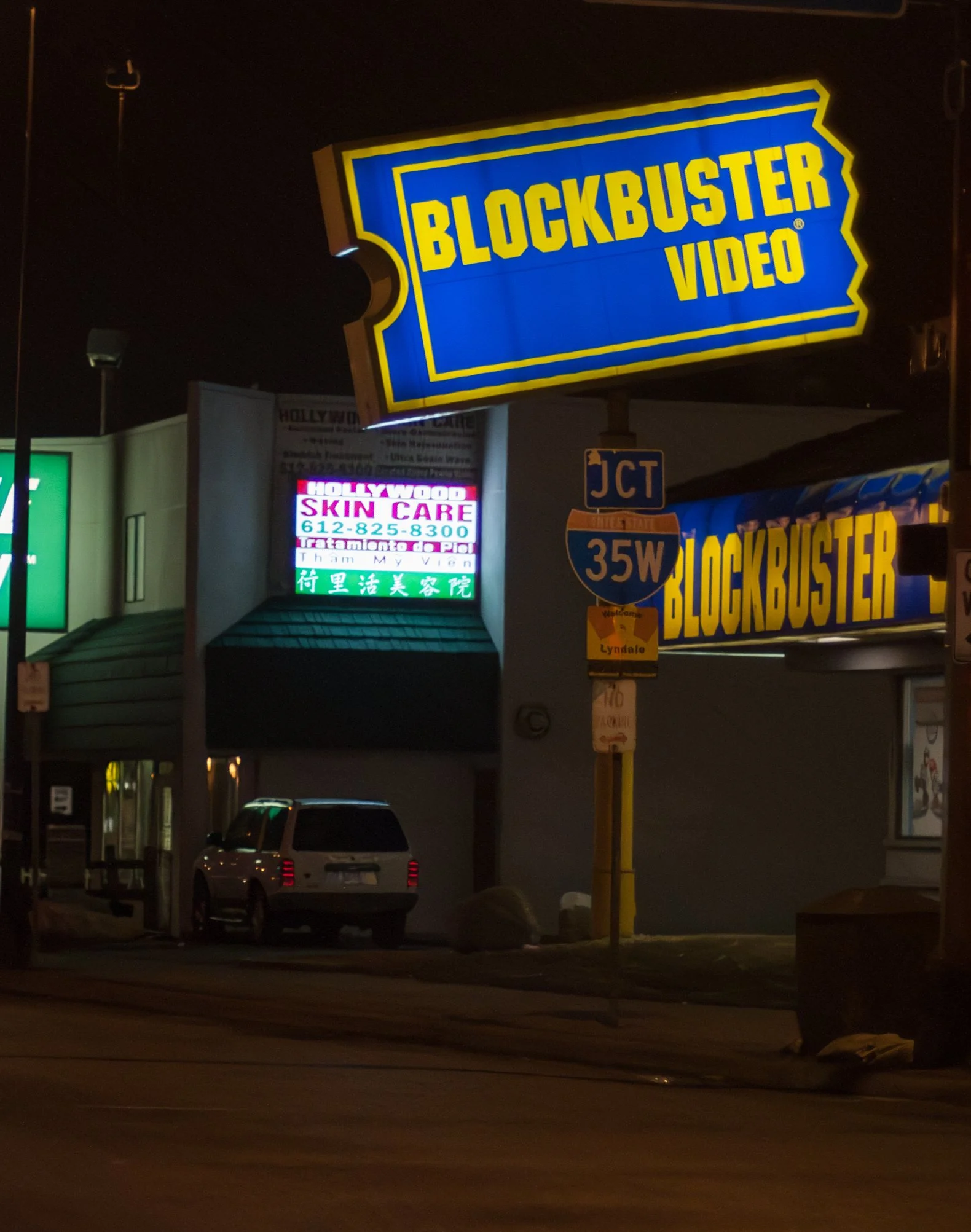
Keyes became Blockbuster’s chairman and CEO in July 2007, stepping into a company already dealing with cash-flow strain and loan-covenant violations left over from its own leveraged history. He was not passive about the threat of digital distribution. Blockbuster acquired the streaming service Movielink and relaunched it as Blockbuster OnDemand, built out a kiosk network to compete with Redbox, and pursued a Viacom content partnership worth roughly 500 million dollars along with talks with Google, though neither of those larger deals ultimately came together. In 2008, Blockbuster also made a widely mocked bid to acquire Circuit City, an attempt to combine content and devices under one roof that was ridiculed at the time, including by Jim Cramer, who put Keyes on his television Hall of Shame over it.
The single line most often used against Keyes comes from a December 2008 interview with The Motley Fool, in which he said, Neither RedBox nor Netflix are even on the radar screen in terms of competition. It’s more Wal-Mart and Apple. In hindsight, with Netflix’s streaming service and subscription model going on to reshape home entertainment entirely, that quote reads as a clear misjudgment of where the real threat to Blockbuster’s business was coming from, and it has been cited in business-school case studies and retrospectives ever since as shorthand for a leadership team that saw the competitive landscape too narrowly.
Keyes’s own account, offered repeatedly in interviews with Fortune, D Magazine, and Inc. in the years since, does not dispute that streaming eventually changed the business, but argues it was not the proximate cause of Blockbuster’s bankruptcy. His version centers on the 2008 financial crisis: Blockbuster was carrying more than 900 million dollars in debt from its earlier leveraged history, and when bankruptcy rumors began circulating amid the broader credit crunch, movie studios reportedly cut Blockbuster’s payment terms from 90 days to cash on delivery, draining roughly 300 million dollars of working capital within a matter of weeks. Unable to refinance in a frozen credit market, the company filed for Chapter 11 in September 2010 and was later sold out of bankruptcy to Dish Network in 2011. Keyes has said the period was personally difficult, describing friends and family urging him to leave the company as its public image soured. Independent retrospectives generally still treat the slow, underfunded pivot to streaming as a real strategic failure regardless of what ultimately triggered the bankruptcy filing, and both parts of that picture, the debt structure he inherited and the strategic decisions made on his watch, are worth holding at the same time rather than treating one as the full explanation.
Since leaving Blockbuster, Keyes has moved into investing and advisory work rather than another large public-company CEO role. He chairs Key Development LLC, an investment group, and has been involved with early-stage space and aerospace ventures, including Back to Space, a STEM-education-focused venture he co-founded, along with board and advisory roles at satellite and space-transport companies. He also wrote a book, Education Is Freedom: The Future Is in Your Hands, and founded a nonprofit of the same name that, by its own reporting, has distributed several hundred million dollars in scholarships and fellowships, a figure that, like the 7-Eleven numbers, comes from the organization itself rather than independent audit.
On Starting Small, Keyes talked with host Cameron Nagle about what it actually feels like to run a public turnaround under scrutiny, the difference between a company failing because of a bad decision versus a bad balance sheet, and why he still believes the popular narrative around Blockbuster’s collapse oversimplifies what happened. He also spoke about how the experience shaped his approach to risk and reputation in the ventures he has taken on since, and why he has generally chosen smaller, more hands-on roles rather than another large public turnaround.
Keyes’s career is unusual in that it offers a genuine before-and-after on the same basic skill set. The financial discipline and operational focus he applied at 7-Eleven produced one of the more cited retail turnarounds of the early 2000s. Applied at Blockbuster, against a much larger debt load, a faster-moving competitive threat, and a financial crisis that hit at the worst possible moment, the same instincts were not enough to prevent a bankruptcy that has become a cultural shorthand for corporate obsolescence. Whether that outcome reflects a failure of strategic vision, a failure of circumstance, or some mix of both is still argued over, including by Keyes himself, which is part of what makes his account of it worth hearing directly rather than only through the version that has calcified into internet folklore.
Listen to the full conversation with Jim Keyes on Apple Podcasts.