
"If you don't respect your perspective and trust that early on when you have a concept... people are going to shoot it down because they can't see it. But the fact that you can see it is brilliant." — Jonathan Ward, ICON
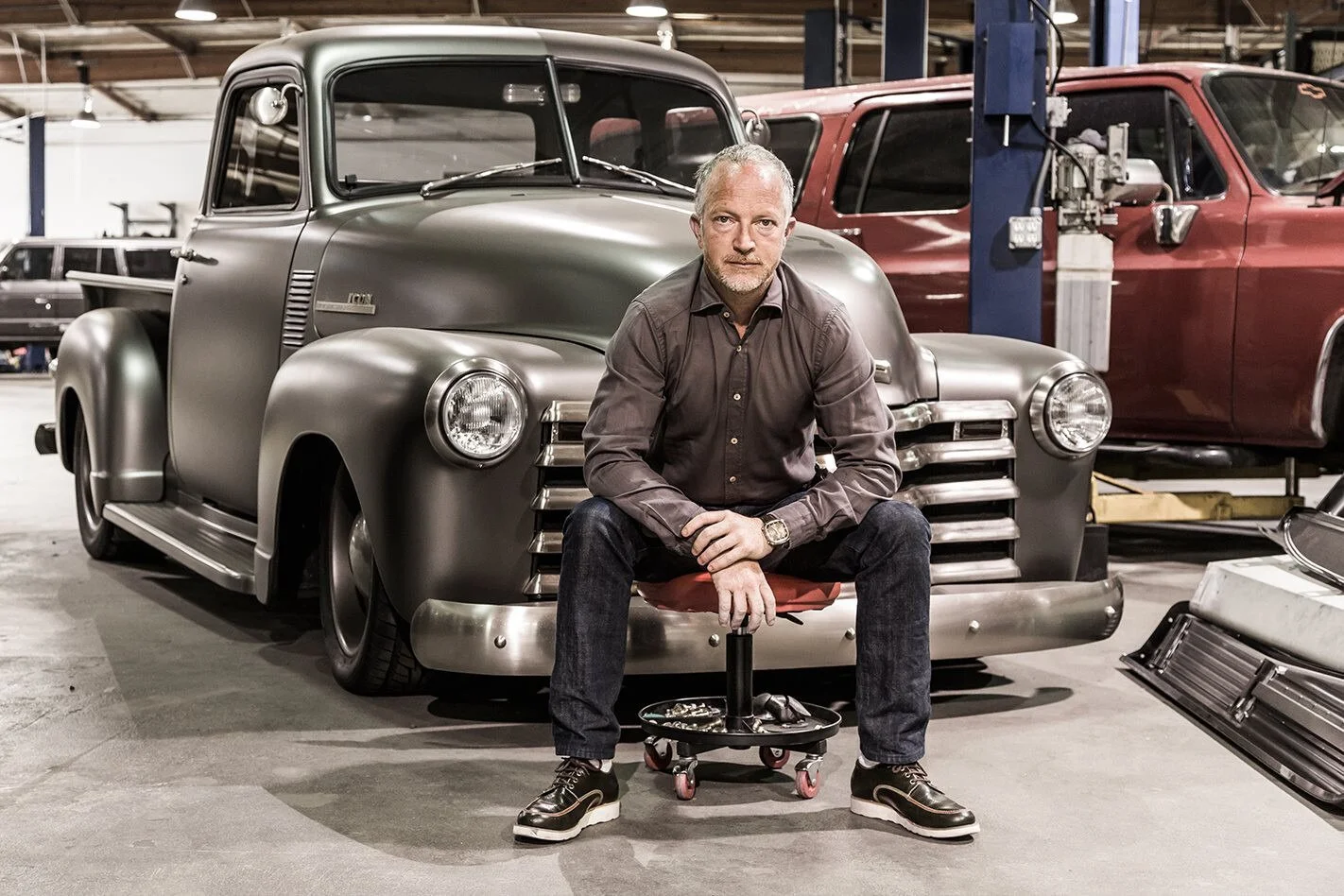
Photo: Street Machine
A Weekend Trip That Became Peter Pan
Jonathan Ward's career started with a $20 bill and a cattle call. Ward, the founder of ICON, grew up in a small town called Elkridge, Maryland, on a farm in the middle of nowhere, until he turned seven. He describes himself as a serial craftsman and tinkerer, a kid fascinated by how things worked who had a bad habit of taking them apart and only occasionally putting them back together. He drew cars, watches and dog portraits. His parents, who came from a small town and regretted never having been exposed to the arts, struck a deal with a family friend in Washington, DC. About once a month, they drove Ward and his sister to the city for the Smithsonian, the Kennedy Center and the museums.
On one of those early trips, a famous ballet dancer asked young Ward whether he danced. Ward said no, he was too short, which he says was the right answer for football, baseball and basketball but exactly the wrong one for this man. The dancer ended up sponsoring Ward to study ballet at a dance theater in Baltimore.
Then came the audition. Another kid in the class was heading to New York City for an audition, and Ward's mom slipped that boy's mom 20 bucks so her son could tag along for the weekend and see the city. Neither parent realized it was a cattle call, where nearly anyone could sign up. Ward, bored, signed his name. He got the part. That put him on Broadway at age seven in Peter Pan, which, according to Ward, ran for a year and a half. "A career just organically blossomed," he said, out of a decision nobody planned.
His father, a young corporate maritime litigator and former Coast Guard captain, was just getting his firm going, so the family split time while Ward worked and supported himself in New York.
From Charles in Charge to a Stalker
The move west came after a CBS contract offer arrived days after he had a private thought that he could not live in New York another day. In Los Angeles, Ward worked steadily in television. By his account he was in the series Charles in Charge with Scott Baio, then in ABC's Heart of the City, and then he had his own show, Beans Baxter, on the new Fox network, which took him to Vancouver for almost two years. He was also the lead in the animated film FernGully.
He was successful, he said, but not famous. His own phrase for it was "don't go to the mall" famous, teen magazine famous. Even at that level he saw constrictions on his lifestyle, and friends who were truly famous had lives he described as miserable. Then a stalker situation turned serious. Ward says he carried concealed for two years, moved out of his house and used an assumed name on sets. His conclusion was blunt: if the goal of success was to get more famous and that was crazier than this, he was out.
Cars had always been one of his many hobbies. The woman he was dating, now his wife of 34 years, kind of hated her job in music management. On vacation in South Africa, he talked her into quitting. They came home, both quit, and started their first automotive brand, called TLC.
The $1,000 Bet
Ward says everyone thought he was completely out of his mind. He has no conventional degrees, but he had taken a USC business extension class and made friends with a professor and a couple of students. One night after class he made a prediction about the coming internet: if you could control supply, you could now create demand. That turned into a $1,000 bet. He was given six months to drive a trackable market up 30 points.
The market he picked was the Toyota Land Cruiser. By then he had been to more than 40 countries and had been in remote places where your vehicle is the difference between life and death. In his telling, it was invariably an FJ40 Land Cruiser. So he went around the western US and bought every FJ40 he could find in original, good condition, stashed them at friends' shops and slowly trickled them back onto the market. When he went to collect on the bet, he says the other side told him it had been a joke. He says he blew a lot of money doing it, but made a lot too.
The Africa trip, he noted, was happening around the same time, so the idea was already percolating. TLC, as he explains it, stood for Toyota Land Cruisers, and that was the entire concept: sales, service, parts and restoration, specializing only in Land Cruisers. Land Cruisers had a cult following, but most people did not think of restoring them.
Chipmunking Away Capital
Where did the capital come from? Ward says it came from about a dozen Land Cruisers he had already purchased. And the money for those came from a side hustle. He loved the golden age of cinema, especially the poster art, and loved vintage leather jackets. He painted a black-and-white, Pre-Raphaelite-style movie poster image onto the back of a 1950s biker jacket with alcohol-based pigments. Someone saw it, and Fred Segal, which he describes as a huge, iconic LA brand, reached out. From about age 16, he says, he painted leather jackets in his trailer on movie sets while waiting to be called, and poured the money into cars. He generally sold what he restored, because he loved the process.
His sister-in-law and her husband loaned him $10,000 at first. His deal was to pay back 10 percent on the $10,000 every 30 days until he got on his feet. He now calls that an absurd offer from someone with no track record.
The third truck he tried to sell brought an offer from a man with no cash but a trade: he was a web designer. Ward had to ask what that was. They swapped a 1973 FJ40, which Ward says was something like his personal beater, for a website. The internet, he said, had such power. If you were "super sniper niche specific," it was a gold rush of finding people looking exactly for you. It was not easy: Ward says he and his wife worked six or seven days a week for at least the first two years and raised both sons in the shop.
On the dates, Ward says he started restoring and flipping cars at 15, and the TLC brand officially went live in 1996, though for a while he did it illegitimately out of his house on a cul-de-sac, with vehicles everywhere and neighbors kept happy with handyman favors. The first shop was 1,200 square feet in a multi-tenant industrial building; by the time they left, he said, they were at about 16,000 across two buildings. The neighbors, meanwhile, ran a betting pool on a grease board picking which month TLC would go bankrupt.
He says it took about six years of chasing their tails and reinvesting 99 cents of every dollar, sometimes 101. He got an SBA loan and paid it off quickly, then took a second mortgage on the home, then paid that off. Other than the in-laws, he says he never had investors, which meant no focus groups, no marketing department and no board to pull his eye off the vision. In his view, brands need to be born out of the mind of "a single lunatic." But he also believes in building a master alliance, citing Napoleon Hill, and says he hired the right CEO, then his COO, at a time when that person's salary was more than his own.
Mr. Toyota Calls
A major early milestone came when the head of Toyota personally got involved. Ward says that at the time he did not even know there was a Mr. Toyota. His wife took the call and almost hung up, thinking it was a joke. His philosophy, he says, is that life is a series of lily pads.
The executive visited the shop with an entourage of suits and, Ward says, thought Ward and his team were nuts. In Japanese corporate culture, he explained, you do not restore old things when you could buy new ones. The visit ended politely, with several bows, and Ward assumed that was that. Within a week he got a call from an executive. Toyota was considering bringing back something based on the DNA of the FJ40, and it commissioned Ward to work on it. He traveled to several Toyota factories around the world and was allowed, as he put it, to build the FJ40 of the modern world in his own kitchen, other than textiles, color and powertrain input. That became a series of three commissions, which Toyota's board voted on. The favorite went to Toyota's California design studio, which created what became the FJ Cruiser. Ward says it was a drastic departure from his design, though a couple of his key elements made it to production. He bought one of the first ones.
Why Not Do a V8 Conversion, but Do It Right
He took pretty much all the profit from that job and began obsessing over what his own version of a modern FJ40 would look like. TLC customers were increasingly in love with the utilitarian purpose of the trucks but not the archaic experience of three-on-the-tree manuals, drum brakes and one-barrel carburetors. They had begun dabbling in upgraded suspension, air conditioning, power steering and better ergonomics. Chevy V8 swaps in old Land Cruisers were nothing new, but Ward felt they were done conventionally, with a cast-iron block and the original transfer case, which left no continuity between parts.
So he went to night school to study CAD and started from a clean sheet of paper while respecting the original silhouette. The first one he built was "killer," but when he added up the spreadsheet, he thought no one would pay for it. He took it to Mickey Drexler, a figure in the apparel business he associates with Banana Republic, Old Navy and J.Crew. Ward had built the body out of aluminum, 5/32 thick, which he said is bulletproof and will never rust, and he wondered whether to cut corners to reduce the price. Drexler told him not to. Stick to your vision, he said, you have already proven you can build a market. Then he said he would buy the first one.
Timing, Ward says, did the rest. Toyota launched the new FJ Cruiser exactly when he finished his first build, and in most of the coverage he became the tiny 50- or 100-word side note behind the big story. That, he says, put ICON on the map overnight. He first housed ICON on the TLC site, but soon realized he was trying to run two religions in one church. About four years ago, they sold TLC to focus on ICON. He says it is doing great, with a new management team in Charlotte, North Carolina, and that he is still involved.
The Ford Call and the Bronco at SEMA
Another milestone came from a man at Toyota in marketing, a tall American named Jim. Years later, Ward says, Jim Farley called and reminded him of their connection: Farley had left Toyota for Ford and wanted to bring back the Bronco. He asked whether ICON would build a Bronco for SEMA to get people excited. Ward said yes but, as he tells it, did not want Ford's money. He would pay for it, but wanted engineering support, direct supplier access for powertrain and access to the deepest archives at Ford's Henry Ford collection, where he looked for the original sketches and photographs.
Ward says he was the first to put the Mustang GT Coyote V8 in a first-generation Bronco, something Ford's dimensional studies suggested would not fit. At SEMA, he said, he watched from many stories above the loading lot as the Bronco came off the truck and about 15 suits swarmed it. Then his phone rang. He was told to bring it to the center of the main hall and that they could not believe he had done it. Ford made room on its booth.
A Chassis Partner and a Chevy Pickup
Art Morrison Enterprises, Ward says, has been ICON's chassis partner on hundreds of vehicles. He bonded with Craig Morrison over a shared love of 1947-to-1953 Chevy pickups, which Ward says are miserable to drive in original form. When Morrison left a truck with a new chassis for a couple of days, Ward took it to 80 miles per hour on the freeway and knew it was the next ICON. Morrison, he said, later passed away from COVID.
What an ICON Customer Experience Looks Like
Ward calls the traditional model bespoke and made to order. It is not cheap, he says, and should never be a spontaneous decision. He gets to know clients: where they live, what the architecture is like, how they will use the vehicle, whether they have dogs and how many kids. Then he builds from a locked, repeatable, CAD-engineered platform while tailoring colors, materials and utilities. The downside is that the wait list once reached as long as five years. As operations scaled, he says, a production Bronco, FJ or Chevy pickup now typically turns around in roughly a year. Some projects are quicker and one-offs take years.
Even a year seems hard for the modern person, he says, noting that if an email has more than three questions, he is lucky to get one answered. So ICON is moving toward building on spec: product ready for what he calls dopamine-addicted, spontaneous buyers. It also gives him more room for funkier colors and materials. Ward also makes apparel, leather goods and footwear. He compares it to an omakase sushi bar, where he makes the decisions himself. The first two spec builds are in production now.
Respect Your Perspective
Ward's advice to aspiring entrepreneurs is to critically respect your perspective, especially with a designed product people will live with. When a concept is novel, he says, people will shoot it down because they cannot see it, but the fact that you can see it is brilliant. Lean on trusted allies, he says, but do not give in. Set the key commandments of what you and your brand are and are not, with answers that should be an emphatic "hell no" or "f yes." Follow that route and you build a tribe of ambassadors, not consumers.
The proof he offers is a number: according to Ward, over 30 percent of ICON owners have three or more ICONs, something he says no one could have told him was possible.
Listen to the full conversation with Jonathan Ward on Apple Podcasts.
Cameron Nagle is the founder and host of Starting Small, creator of the Starting Small Summit, and author of Starting Small: The Raw Truth About Entrepreneurship and the American Dream. About Cameron | Listen on Apple Podcasts