From Bootstrapped Ad Tech to Men’s Skincare: How Jared Pobre Built Caldera + Lab After Wyoming Wrecked His Skin
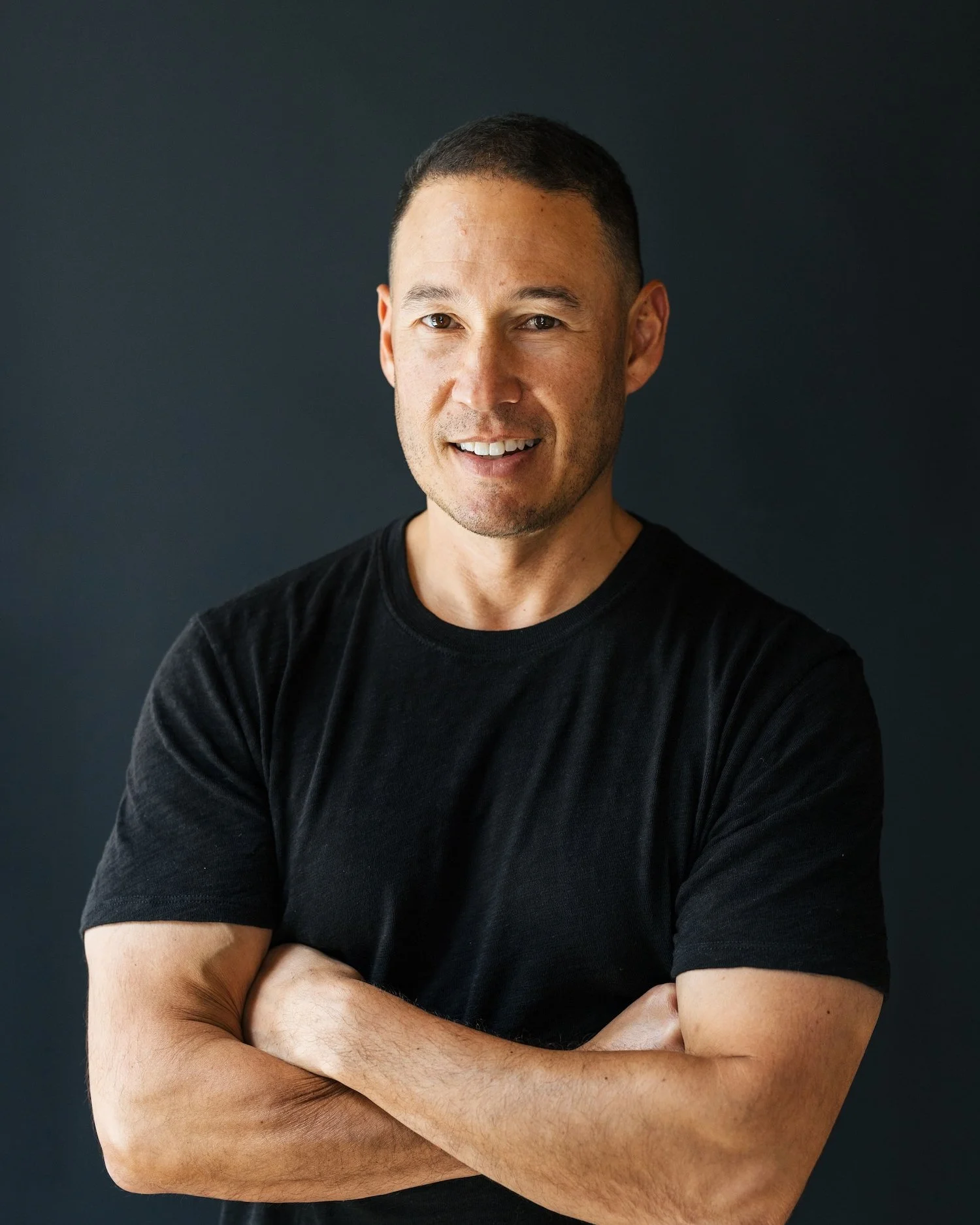
Jared Pobre, founder and CEO of Caldera + Lab. Photo via Beauty Independent.
Jared Pobre built an ad tech business from nothing to more than nine figures in revenue with no outside investors and no debt. Then he moved part-time to Wyoming, where the dry mountain air wrecked his skin, nothing on the shelf helped, and he realized he missed building something. The result is Caldera + Lab, a men's skincare brand he says is now an eight-figure business sold at Nordstrom.
In this episode of Starting Small, Pobre, founder of Caldera + Lab, tells the full story: a Silicon Valley childhood, a dot-com-bust first job, a first business that lost its only client in month four, a bootstrapped ad network, and then the move into physical product with two years of formulation and a clinical trial before launch.
This is the full Jared Pobre founder story, and the origin of Caldera + Lab, as he told it on the show.
Listen to the full episode: Starting Small on Apple Podcasts: Caldera + Lab with Jared Pobre
Key takeaways from Jared Pobre
His first business nearly died in month four. Pobre says WorldCom Wireless, his only client, went bankrupt and left him unpaid, which taught him not to rely on one customer.
He bootstrapped to nine figures. He says his ad tech company reached over nine figures in revenue with no investors and no debt.
Caldera + Lab started as a personal problem. The dry, high-altitude climate of Wyoming, and a wife already using clean beauty products, led him to ask why high-end skincare for men did not exist.
He took the slow route. He says Caldera spent two years in product development, including a third-party clinical trial, and launched in January 2019 with one product.
Retail came late. The brand was direct-to-consumer until this year, when Nordstrom became its first national retailer.
His advice: bring an exceptional product to market, and accept that failure is part of the process.
Growing up in Silicon Valley, before it was Silicon Valley
Pobre was born and raised in San Jose, California. In the 1980s and 1990s, Silicon Valley was not the Google and Facebook era it is now. He grew up in a middle-income family with one sister, went to public schools and then to USC, where he studied business and finance.
From finance to tech
Pobre expected to go into finance and took a job at a small finance and wealth management company, but quickly learned it was not for him. His sister's friends back in the Bay Area were in tech, and she encouraged him to look at it. He stayed in Southern California, for the weather, and took the first internet company that hired him, starting in sales alongside other USC grads. He worked his way through affiliate marketing and business development.
He then moved to another startup as part of the junior executive team. He graduated in 1999, and by 2001, with the dot-com bubble bursting and 9/11, things were shaky; the company did not get its funding and went out of business.
A side business that took off in three months
Pobre next took a job at Autobytel, a public lead-generation business for auto dealers, working as a media buyer. At the same time, he started his own business. He says his parents told him to get a job, not start a business, because it was not in their family's DNA.
The business generated leads for a mobile carrier, WorldCom Wireless, through a distributor with a nationwide license. He built his own website, bought Google and email traffic, and submitted the leads; the carrier sent back how many were approved, roughly 70 out of 100. By month three, the business was already generating about $100,000 in revenue, so he quit his job.
Then, in month four, WorldCom Wireless went bankrupt. He says he was not paid for a couple of months of revenue but still owed publishers and media costs. "I learned quite quickly how tough it was to be an entrepreneur," he says, but he fought through it.
Diversifying, and Future Ads
Pobre pivoted to working with AT&T, then DirecTV, and diversified from there. The lesson: do not have concentration risk in one client, and the higher the quality of your clients, the higher the quality of the business.
The business went through several iterations and became a company called Future Ads. He brought on a junior partner, a technically minded CTO, and a group of developers, building products in casual gaming and then an ad network that let other publishers plug in. It grew past nine figures in revenue, was highly profitable, totally bootstrapped, with no investors and no debt, but it eventually hit a ceiling as social and mobile gaming took off.
The roll-up, and stepping back
Around 2013, a group doing a roll-up of ad tech and mobile gaming properties approached the company. They had access to capital and wanted to merge it into a new entity in which Pobre's team would own the majority. That became Propel Media in 2015.
At the time, he had just had a baby and had gotten married the year before, and wanted time away from day-to-day operations. He became executive chairman, stayed the largest shareholder, and the other company's CEO became CEO of the combined business. The company had raised debt to buy part of his equity out. The plan was to keep rolling up ad tech companies; he says there were successes and failures, including buying a pre-revenue company called Deep Intent in 2017, which he says turned into an exceptional business. He later sold it and exited everything to private equity.
Wyoming, and a skin problem
In 2015, after taking some chips off the table, Pobre built a vacation home in Wyoming and started spending more time there between the mountains and Los Angeles. They fell in love with the community and lifestyle, and put their first daughter in preschool there.
But he went from LA's Mediterranean climate near the ocean to a high-alpine, dry environment, and it hammered his skin. If you spend time in the mountains, your hands start to crack and your lips break from the dryness. He was getting advice to take time off from being an entrepreneur and enjoy the mountain lifestyle: backcountry skiing, golf, mountain biking. He tried it, and after a short while, not working on product or running a team was tough.
"Why doesn't high-end skincare for men exist?"
Pobre says the sun and wind were chafing him, and the products he was using, from other brands, were not giving relief. Meanwhile his wife, with a new baby, was going through the clean beauty movement and removing toxicity from self-care and home products. He asked why high-end skincare for men did not exist, started using his wife's products and got immediate relief. He also found other men in Jackson using their wives' products.
His thesis was to skate to where the puck was going: at some point there would be a market for high-end, performance skincare for men. E-commerce and direct-to-consumer were growing, and he had seen husband-and-wife founders succeed in consumer packaged goods and beauty. It was a new challenge: he had always done B2B and software, nothing physical. His wife helped with research but, with multiple kids, could not be full-time. He says they always had the mindset that if it got too tough, or the products never reached a place they were proud of, or the model did not work, they would have walked away. But at every step they got a positive signal, so he kept going.
Two years of formulation and a clinical trial
Before doing anything else, Pobre researched the industry, mostly independent women's clean beauty brands, to understand who was winning and why. He says the winners took their time with proprietary formulas and thoughtful ingredients with real efficacy, rather than fast-failing to market. Men's skincare at the time was mostly repurposed women's formulas with different scents and packaging.
He spent about six months researching the category with consultants, then reached out to top scientists, green chemists and formulators who were doing the best work for the women's brands. The team spent two years in product development, including an actual clinical trial run by a third party, to validate efficacy and give credibility to a founder with no skincare background. He calls it an anti-fail-fast approach: expensive and high risk, since formulas can be unstable, but he says they avoided many of the pitfalls of doing it the hard way.
Launching with one product
Caldera + Lab launched in January 2019 with one flagship, the serum called The Good, which he says is still the top seller. His reasoning came from personal experience: when he turned 40, serums gave him the most relief and performance, and the serums available were women's or unisex. Nothing was dedicated to men with older, drier skin or a dry climate. So the team put all its chips behind one product it firmly believed in, expecting men to get it the second they put it on their skin.
The brand was totally direct-to-consumer, and stayed that way until recently.
COVID and steady growth
Every step has been hard, he says, and nothing came easy. He did not know if he would sell any of the product or be stuck with a warehouse of 10,000 units, but once marketing started, he began to learn. By the second half of 2019 the company was low on inventory and seeing repeat purchases. When the pandemic hit, they were cautious and did not get the COVID bump many women's brands did; men, he thinks, were shocked. Still, the business grew, about doubling year over year at times, and the team had to learn and evolve at every stage.
Funding: bootstrapped, then a Series A
Caldera + Lab was self-funded to profitability and eight figures. In 2024 it did its first Series A, bringing on an institutional investor to help grow inventory and keep a cash cushion.
What marketing works
Pobre says the marketing message evolved. Early on the science overwhelmed people, who mostly want to know what a product will do for them, so the brand leaned into that: fine lines, wrinkles, dark spots and baggy eyes. Now it blends the science with those benefits, speaking to different personas with different marketing funnels. Early on the company used many agencies and then gradually replaced them with in-house teams; he calls bringing marketing and growth in-house a big unlock.
Nordstrom and retail
Nordstrom is the first national retailer for Caldera + Lab and launched a few months before the interview. Amazon is also a big part of the business and benefits from the customer acquisition done through Meta, Google, YouTube and podcasts. He says retail is aimed at customers the brand does not reach on social media, those who like going into stores. Nordstrom has told the team it is performing as one of its brands in the tier just below the top. Caldera + Lab just hired its first VP of retail, and the plan is to make retail a third channel alongside direct-to-consumer and Amazon.
Who buys
According to Pobre, customers are overwhelmingly men buying for themselves, aged 35 to 70.
The product line
After The Good, men asked for a moisturizer and a cleanser. Caldera + Lab added The Base Layer, a moisturizer built for dry skin and dry climates, and The Clean Slate cleanser. Men in humid places with oily to normal skin said the Base Layer was a little thick, so the company launched a thinner Hydro Layer and another product, The Great. He says these skincare products are all top performers.
For men confused about where to start, he suggests: a cleanser is essential, a moisturizer is the next safe step, forming a simple routine that takes under five minutes, and if you want anti-aging or transformational results, a serum does the heavy lifting.
Jared Pobre's advice for founders
Pobre gives two pieces of advice:
Bring something exceptional to market. You can get away with a mediocre product or service for a short time, but you cannot build something special. Make sure it satisfies and exceeds customers' expectations.
Failure is part of the process. Mistakes are part of it; if they are not fatal, you can learn, grow and become stronger, and surviving the tough parts can get you somewhere interesting.
Frequently asked questions about Jared Pobre and Caldera + Lab
Who is Jared Pobre?
Jared Pobre is the founder of Caldera + Lab. He grew up in San Jose, studied business and finance at USC and built a bootstrapped ad tech company before starting the skincare brand.
What is Caldera + Lab?
According to Pobre, a high-end performance skincare brand for men, launched in January 2019 with a flagship serum called The Good.
Is Caldera + Lab sold at Nordstrom?
He says Nordstrom is the brand's first national retailer, launched this year, alongside direct-to-consumer and Amazon.
How was Caldera + Lab funded?
Pobre says it was self-funded to profitability and eight figures, and raised its first Series A in 2024.
Who buys Caldera + Lab?
He says overwhelmingly men aged 35 to 70 buying for themselves.
Listen to the full conversation
Hear Jared Pobre tell the Caldera + Lab story in his own words on Starting Small on Apple Podcasts, watch it on YouTube, and learn more at calderalab.com.