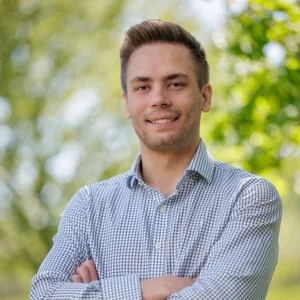
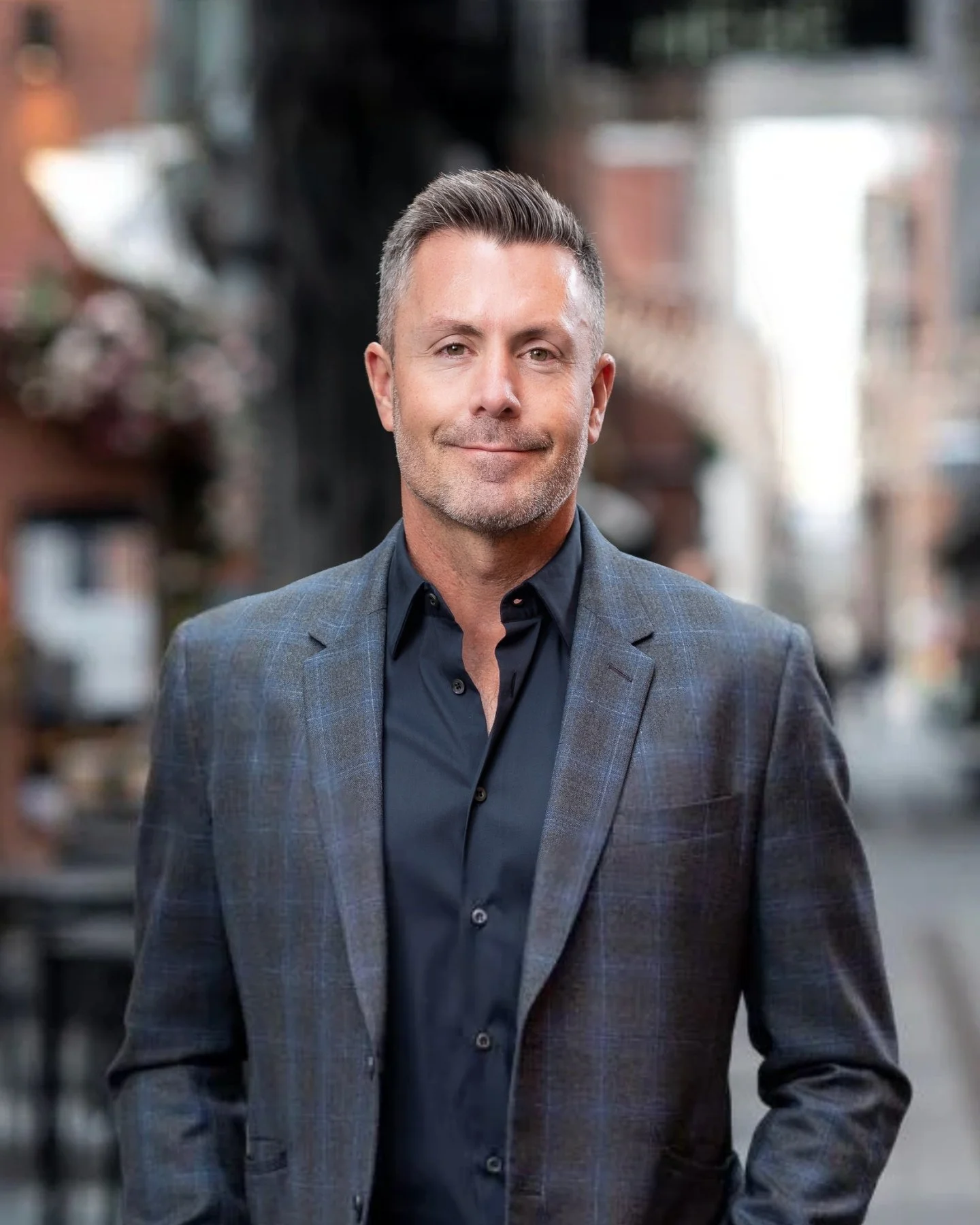
Photo via Commercial Search and Realberry
Chad McWhinney was in seventh grade in 1986 when he and his younger brother Troy built a roadside strawberry stand at their grandparents' mobile home park. By high school, he says, the brothers ran about 30 stands across Southern California with close to 100 employees. Then, after sales crashed in 1991, he dropped out of college after about a week, moved to Colorado, and, with Troy, assembled options on 28 farms that became Centerra, a roughly 3,300-acre development in Loveland. Today the company is called Realberry, a name that nods straight back to that first strawberry stand.
In this episode of Starting Small, McWhinney, co-founder of Realberry, tells the full story: a beach-town childhood, a teenage retail business, a land play timed to a depressed market, and a philosophy he sums up as "profit follows value."
This is the full Chad McWhinney founder story, and the origin of Realberry, as he told it on the show.
Listen to the full episode: Starting Small on Podbean: Realberry with Chad McWhinney · Watch on YouTube · Apple Podcasts
Key takeaways from Chad McWhinney
A strawberry stand was the first business. He and Troy started it in 1986, in seventh and fifth grade, and he says it grew to about 30 locations by high school.
He bet on land at depressed prices. McWhinney says he and Troy optioned 28 connected farms, about 3,300 acres, at depressed agricultural prices and the market rebounded in the mid-1990s.
Aligned capital, aligned community, aligned developer. He says that combination is the "secret sauce" for the places the company builds.
Realberry is the rebrand. An investor suggested putting "real" and "berry" together after noticing how people light up at the strawberry stand story.
His advice: do what you love, and remember that profit follows perceived value.
Growing up in Huntington Beach
McWhinney grew up in Southern California, in the Huntington Beach area, with an entrepreneurial father and a loving mother. It was a beach-town childhood, with junior lifeguards, and a business partnership with his brother Troy that he says continues today.
The strawberry stand, 1986
His father had sold strawberries on a street corner as a kid. When Chad was in seventh grade and Troy was in fifth, they asked their dad how they could make money, and he suggested a roadside strawberry stand. A farmer he knew could set aside very ripe berries for them. So the brothers built a small stand at their grandparents' mobile home park in 1986 and sold fresh strawberries on a Saturday and Sunday. They sold out both days.
That led to partnering with their older brother Sean, and eventually four brothers were in the business. McWhinney says it started on weekends because the brothers were in school. When Sean got a driver's license, they opened stands four or five days a week, then seven, hiring friends and employees. They also sold pumpkins and Christmas trees, and had to change ordinances in different cities to make it work. By high school, he says, they had about 30 stands and close to 100 employees, since people did not work seven days a week and shifts had to change.
Leaving class to run the stands
At Marina High School, McWhinney says, he had an agreement with the principal: he could leave during the day as long as he hired his teachers to tutor him at night. The stands were not open at night, so he would leave for a couple of hours during the day to attend to the business, and his teachers came over after school. As long as homework got done and grades stayed good, he says, everything was fine.
Retail taught him a lot about customers and employees, he says. There were thefts and robberies, rainy days when the fruit was not good, and the satisfaction of seeing customers leave with big smiles.
1991: when the business broke
It was a great business, McWhinney says, until 1991, when the first Persian Gulf War began and sales dropped meaningfully. The locations went from very profitable to breaking even, or losing money, and all the profits had been put back into the business.
When he graduated from high school, he went to college for about a week, then decided he wanted to be in the real estate investment business, "the asset appreciation business." He moved to Colorado after reading a Time magazine article called "Boom Time in the Rockies," which said everyone was getting ready to head for the hills and that real estate was going to be a wild ride. That was the early 1990s, and he has been there ever since.
Loveland: 28 farms and Centerra
His first real estate opportunity came through the family. McWhinney says his father inherited a bit of farmland in Loveland, Colorado, and planned to sell it to pay inheritance taxes. Chad asked to buy it. His father agreed to sell at the appraised value on one condition: Chad had to move back to Loveland and become part of the community. He packed his truck and moved.
When he got there, other farms around the family farm were also available. He and Troy ended up assembling options to buy 28 different farms, all basically connected, representing about 3,300 acres. Today that development is known as Centerra. They were optioning at depressed agricultural prices, and they anticipated the market would rebound. It did, in 1993, 1994 and 1995. By the time they had to close, he says, they had a very good basis locked in and the land had appreciated from there.
From land investors to vertical developers
McWhinney says you start out doing everything yourself and eventually bring on help. One of the first people was a receptionist who could also do the books and be office manager. A couple of years in, there were four or five associates, covering accounting, HR and clerical tasks.
For the first couple of years the brothers were land investors only. Then they decided to become their own vertical developer, serving as the general partner instead of simply contributing land. That led to office buildings, industrial buildings, retail centers and apartments.
"Creating places people love"
The company started as a master planned community developer: taking a large piece of land, master planning it and creating the highest and best uses for the different parcels. McWhinney says the vision was always to create community and a sense of place, and the tagline today is "creating places people love." He says the company was never interested in subdividing land and selling it off without caring how people use it or live.
They grew up watching large developers in Southern California, such as the Irvine Company and Rancho Mission Viejo, create communities that earn a premium to market. McWhinney sees that premium as a check on whether you are delivering value: the more customers are willing to pay, the better the sign. The goal, he says, was for the whole to be greater than the sum of its parts.
Denver Union Station and aligned capital
He calls Denver Union Station a milestone for the company and says it was an honor to work with talented people, including Dana Crawford. A team had come together with a vision, he says, and needed help executing it.
His philosophy: if you want to create a great place, do not just look at the developer, look at the capital source. He describes "aligned capital, aligned community with the transit agency and the city, aligned developer," and says the customer ultimately feels the intention of all the parties. When people build to sell, he says, they cut their way to profitability, which he calls death by a thousand cuts: the customer eventually senses that something is off and takes their dollars elsewhere.
Much of the company's work involves public-private partnerships, he says, in places such as Denver, Loveland, Broomfield and Garden Grove, California, paired with family office and high-net-worth capital that wants good returns and wants to give back. When those three come together, he says, that is the secret sauce.
Finding deals, and where the company works
McWhinney says opportunities come from all directions: some come to the company, and some the team sees or hears about. They look at many and are disciplined about picking only those that stand out.
Geographically, he says, hospitality is a national footprint, working with partners including Sage Hospitality and Proper Hospitality. The rest of the work focuses on the Rocky Mountain West and Texas, though a unique opportunity could pull them elsewhere. He and Troy describe themselves as generalists, with "sharpshooters" in each business line: hotels, apartments, land.
How involved the team is after ownership, he says, depends on the use. A hotel is an operating business; an industrial building leased to a company like Amazon is closer to autopilot. Denver Union Station is high-touch placemaking.
COVID: fear and opportunity
When COVID hit in 2020, McWhinney says, it was a very difficult time: thousands of people at hospitality partners needed to be laid off. Congress stepped in with PPP funds, the Fed dropped interest rates, and demand came roaring back, followed by strong times for real estate. The business is cyclical, he says. The company tends to make its best investments when there is fear and tends to hold long term, harvesting some investments when times are at their peak.
Lake Tahoe Proper at Cal Neva
Asked about a favorite project, he points to one under way: Lake Tahoe Proper at Cal Neva. He says it has strong community support and a group of aligned investors, and that the team held more than 120 neighborhood meetings with Tahoe residents. What he heard consistently was, "please don't tear it down." People wanted the property honored and brought back for their generation, he says. He calls it one of the most exciting projects the company has worked on.
The rebrand to Realberry
When you are in seventh and fifth grade, McWhinney says, you do not know what to name a business, so you pick your last name. As the company grew, the brothers knew they wanted a new name but nothing resonated, even after hiring firms to help with names and logos.
Then an investor and friend, Hayes Barnard, suggested that the new name should include strawberry, since people light up when they hear the strawberry stand story. Many people think of the company as real estate, McWhinney says, but it is really about real impact, real returns, real community, real investments and real people. Put "real" and "berry" together, and you get Realberry. Cameron noted the change came in early 2026.
Opening investing beyond the top one percent
Cameron noted that the company had historically worked with high-net-worth individuals and companies writing million-dollar-plus checks, and recently opened to investors around $100,000. McWhinney explains the thinking: investing should not be reserved for the top one percent, and to get access to real estate today you pretty much have to write a big check. He expects that to change as assets get tokenized and more things go digital, letting investors invest directly and efficiently. "Success comes to those who get in front of the inevitable," he says.
He is clear that it is not here yet: he expects it within the next year or two, and the company is getting its systems ready. He also says real estate does not always need to be sold. Through technology and a proper NAV valuation, he says, a group of investors can own great real estate, and bringing in additional investors creates the company's own market and liquidity without selling assets. This is the company's view of where investing is heading, not investment advice.
AI and aligned partners
McWhinney says the company uses AI a lot and considers it a powerful tool, especially "agentic AI," where work that used to be manual can be done by technology very fast. The company invests heavily in technology and tries to look at "where the puck is going." For him, what matters is aligned partners, a place people get to enjoy that helps lift a community, and solid long-term, risk-adjusted investments. "When those three come together, that's the sweet spot," he says, adding that the company has been at it for 35 years and hopes to do it for another 35.
Working with cities
Cameron asked about developing in places like northern Indiana near the University of Notre Dame, where people need to work, play and live. McWhinney says the company likes cities that are proactive and see the benefits of public-private partnerships. When a community's public dollars for public purpose can be threaded into private development, he says, you create a place people love and spend more money in, which generates more tax revenue. The community wins, the investors win and the city wins.
The future: best, not biggest
Asked about the future, McWhinney says the company does not want to be the biggest, but the best at what it does. He compares it to compound interest: a little better and a little bigger every day, without growing too fast. "Quality over quantity is very important," he says. His line: "Take care of your customers or find someone else who will." If you want to make more money in the business, he says, do not focus on money; focus on adding perceived value for cities, investors and clients. "Profit follows value," and he does not think many people get that.
Chad McWhinney's advice for founders
His advice for an aspiring entrepreneur:
Do what you love. Do what you cannot wait to get out of bed and do, something you would do for free.
Profit is a byproduct. It comes from doing something well, and better than anyone else. He recalls that when Warren Buffett was asked what someone should do, he said to do something customers cannot wait to give you money for.
Understand perceived value. He defines it as price relative to quality: learn what people value and what they do not, and deliver it in a way that is true to your passion and better than your competition.
Frequently asked questions about Chad McWhinney and Realberry
Who is Chad McWhinney?
Chad McWhinney is a co-founder of Realberry, formerly McWhinney. He grew up in Huntington Beach, California, started a strawberry stand business with his brother Troy in 1986, and later moved to Colorado to build real estate developments including Centerra.
What is Realberry?
According to McWhinney, it is the new name, adopted in early 2026, for the company formerly known as McWhinney, combining "real" and "berry" as a nod to the original strawberry stand.
What is Centerra?
McWhinney says it is the Loveland, Colorado development that grew out of options he and Troy assembled on 28 connected farms, representing about 3,300 acres.
What does "profit follows value" mean?
It is McWhinney's view that focusing on adding perceived value for customers, cities and investors leads to profit, while focusing on profit directly gets it backwards.
What are Realberry's current projects?
He points to Lake Tahoe Proper at Cal Neva, the revival of a property at Lake Tahoe, among other work.
Listen to the full conversation
Listen to the full conversation with Chad McWhinney on Apple Podcasts. Hear Chad McWhinney tell the Realberry story in his own words on Starting Small on Podbean, watch it on YouTube, and learn more at realberry.com. The Starting Small Summit returns February 17, 2027, at the Everest-Rohrer Auditorium in Mishawaka.