Justin Fenchel didn’t set out to build a beverage company. He set out to fix a party.
As a student at the University of Texas at Austin, Fenchel was a regular at the concerts, music festivals, and tailgates that define the city’s culture. Every time, he ran into the same problem: there was nothing good to drink that fit the moment. The options were traditional beer, sugary flavored malt beverages, or boxed red or white wine that felt like something you’d bring to a dinner party, not a festival lawn. Nothing was portable, and nothing was built for the way his generation actually wanted to drink at these events.
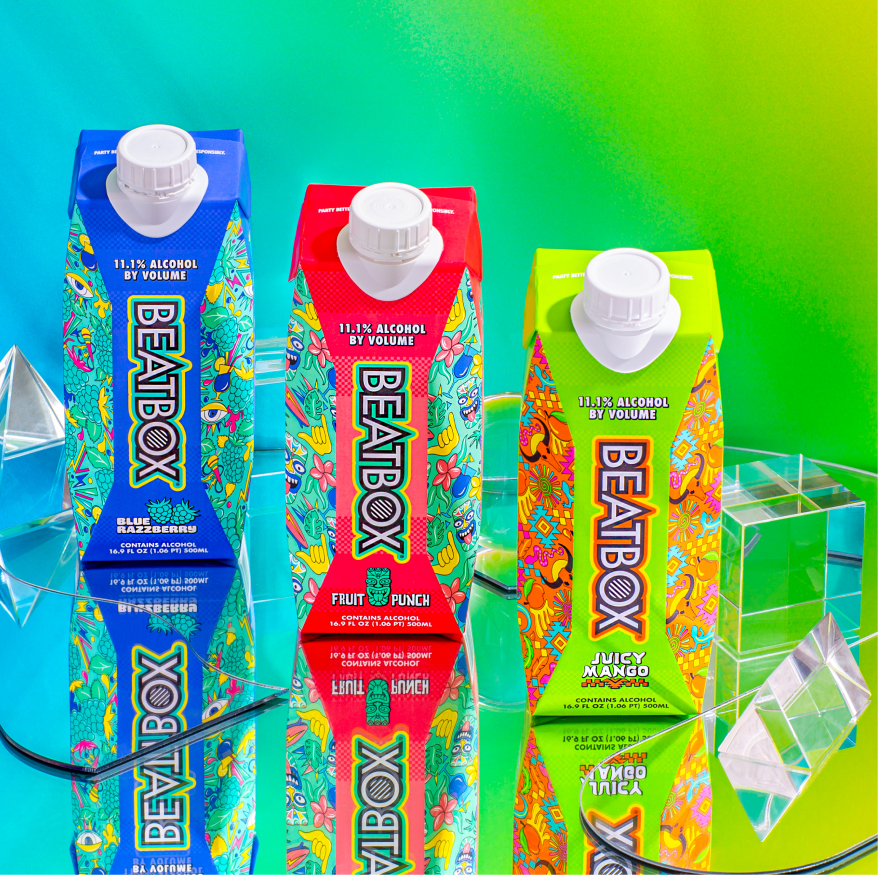
While pursuing his MBA at UT’s McCombs School of Business, Fenchel teamed up with fellow students Aimy Steadman and Brad Schultz to solve the problem themselves. The idea became a five-liter box of flavored, wine-based party punch — portable enough to carry into a festival, and strong enough to feel like an actual party in a box. They started small, blending and refining recipes in a North Austin warehouse and hand-distributing boxes to local liquor stores to build a following one purchase at a time. Their first two flavors were Blue Razzberry Lemonade and Cranberry Limeade, both at 11.1% ABV, with each five-liter box working out to roughly 34 glasses of wine for about $25. They called it BeatBox.
For the first couple of years, BeatBox was a scrappy, self-funded operation. That changed in October 2014, when Fenchel, Steadman, and Schultz walked onto the set of Shark Tank and asked for $200,000 in exchange for 10% of the company. Barbara Corcoran offered $400,000 for 20%. Kevin O’Leary countered with $200,000 for 20%. Then Mark Cuban leaned in and told them something that reframed their whole pitch: “You guys don’t sell wine, you guys sell fun.” Cuban offered $600,000 for 33% of the company. The founders countered: what about $1 million for the same 33%? Cuban said yes — at the time, it was the second-largest deal in Shark Tank history.
That single appearance changed the trajectory of the business. The exposure put BeatBox in front of retailers who had never heard of a boxed party drink before, and the founders started fielding calls from buyers across the country instead of knocking on doors themselves. But the deal alone didn’t build a $200 million brand — it bought them a seat at the table, and the next decade was about proving they belonged there.
Today, BeatBox Beverages is one of the fastest-growing ready-to-drink (RTD) brands in the country. In 2025, the company is projected to hit $245 million in revenue, and it’s now the #3 RTD brand nationwide, sold in more than 130,000 retail locations across all 50 states. Ad Age named BeatBox one of America’s Hottest Brands in 2024.
Part of that growth has come from BeatBox leaning into real partnerships rather than simple endorsement deals. The clearest example is the company’s relationship with Shaquille O’Neal, who came on not just as a spokesperson but as an investor and product collaborator. Shaq worked with the BeatBox team to co-develop Shaq’s Blueberry Lemonade, which became the company’s most successful product launch to date — a meaningfully different model than a celebrity simply lending a name to a can.
BeatBox has also been public about building an employee-first culture as it scaled into a distributed, largely remote company. The team has run festival ticket lotteries for employees and other programs designed to keep staff connected to the same live-event energy the brand sells to customers — a detail that says something about how a company built around shared experiences tries to hold onto that identity internally as it grows past its scrappy startup years.
In this episode, Justin breaks down what it actually felt like to negotiate with the Sharks in real time, why he believed asking for $1 million was the right call even as a first-time founder with a small, self-funded company, and how that single deal opened doors that organic growth alone couldn’t have. He also gets into the realities of scaling a beverage brand nationally — retail distribution, manufacturing at scale without losing product quality, and how BeatBox thinks about new flavor and format launches without diluting what made the original product work.
Make sure to check out BeatBox Beverages at: https://beatboxbeverages.com/
Check out my new book on Amazon: https://amzn.to/4kRKGTX
Sign up for Starting Small University to join our interviews LIVE and ask questions: https://startingsmallmedia.org/startingsmalluniversity
Visit Starting Small Media: https://startingsmallmedia.org/
Subscribe to exclusive Starting Small emails: https://startingsmallmedia.org/newsletter-signup
Follow Starting Small:
Instagram: https://www.instagram.com/startingsmallpod/
Facebook: https://www.facebook.com/Startingsmallpod/
LinkedIn: http://linkedin.com/in/cameronnagle
Cameron Nagle is the founder and host of Starting Small, creator of the Starting Small Summit, and author of Starting Small: The Raw Truth About Entrepreneurship and the American Dream. About Cameron | Listen on Apple Podcasts