
G2A.com: How Bartosz Skwarczek Built (and Defended) a Global Game Key Marketplace
Bartosz Skwarczek grew up in Poland in the 1990s, in the years right after communism ended, in a family he has described as not wealthy. Games and technology were expensive relative to what most Polish families could afford, and that gap between what young gamers wanted and what they could actually pay stuck with him. According to his own account, the origin of G2A traces back to an unusual mentorship: an 18-year-old named Dawid Rożek sought Skwarczek out for guidance, and after several months of mentoring him, Dawid proposed they start a gaming business together. That partnership became G2A.
The company launched in 2010 in Rzeszów, Poland, originally under the name Go2Arena, as a straightforward online retail store selling video games. For its first three years it operated as a direct retailer, buying and reselling inventory itself. In 2013, the company made the strategic pivot that would define its future: shifting from a direct retail model to a marketplace, where independent sellers — individuals and businesses — could list digital game keys and other digital goods for sale, with G2A operating the platform and taking a cut of each transaction. The G2A Marketplace officially launched in 2014, and the company has operated as a marketplace ever since, rather than a first-party retailer competing directly with publishers like Steam.
By the company’s own account, G2A has grown into one of the largest digital marketplaces of its kind, serving customers in roughly 180 countries with a catalog that includes game keys for Steam, the EA App, Ubisoft Connect, PlayStation, Xbox, and Nintendo Switch, alongside gift cards, software licenses, and other digital goods. The company reports more than 35 million registered users and tens of thousands of active sellers, though these figures come from G2A’s own materials rather than independent audits, and the exact numbers vary somewhat across the company’s own public statements over time. Employee count is similarly imprecise — third-party estimates and the company’s own figures put headcount somewhere between roughly 400 and 600 people across multiple countries, with no single authoritative number available since G2A is privately held and does not publish audited financials.
G2A’s growth has not come without significant controversy, and it is worth covering directly rather than glossing over. Because G2A operates as an open marketplace where third parties can list keys, some sellers have historically used keys obtained through stolen credit cards, exploited review and giveaway codes, or regional price arbitrage — buying keys cheaply in low-price regions and reselling them at a markup elsewhere. Indie developers have been especially vocal critics: the studio tinyBuild publicly claimed roughly $450,000 in losses tied to fraudulent key resales in 2016, and Wube Software, maker of the game Factorio, reported significant chargeback losses before reaching a settlement with G2A reported at $39,600 in 2020. In 2019, indie publisher No More Robots founder Mike Rose launched a public petition asking G2A to delist all indie games entirely, arguing the platform repeatedly hurt small developers. Riot Games banned G2A from sponsoring League of Legends esports teams in 2015 after G2A-affiliated accounts were found selling fully leveled game accounts in violation of Riot’s terms.
G2A has pushed back on the scale of these criticisms and has taken some concrete steps in response. The company launched G2A Direct in 2016, a program letting developers list and sell directly on the marketplace while keeping a 90 percent revenue share, framed as its answer to the gray-market criticism. After the 2019 petition, G2A publicly offered to reimburse affected developers at ten times their proven chargeback losses, fund third-party fraud audits, and built a “Key Blocker” tool developers could use to prevent review and giveaway keys from being resold on the platform — though by the company’s own account, only a small fraction of the developers it approached actually used the tool. G2A has also stated that indie games represent a small share of its overall transaction volume and that the vast majority of transactions on the platform are legitimate, though these figures, like most of the company’s public numbers, are self-reported rather than independently verified.
G2A operates inside a genuinely large digital goods market. Industry research firms estimate the broader game key distribution and secondary marketplace category at somewhere between $14 billion and $21 billion combined as of 2025, with projected growth into the high-$20-billion to $40-billion range over the following decade — though these figures come from market-research vendors whose methodology is not fully transparent, so they should be treated as directional estimates rather than precise facts. G2A competes with other gray and secondary marketplaces like Kinguin and Eneba, all of which face similar tension between offering gamers meaningfully lower prices and drawing criticism from developers and publishers who see the gray market as undercutting official sales and enabling fraud.
On the podcast, Skwarczek talked candidly about what it takes to build and run a marketplace business at global scale while managing an ongoing, adversarial relationship with parts of the industry it depends on — game publishers and developers who are simultaneously G2A’s suppliers, through the keys their games generate, and some of its most persistent critics. He discussed the operational complexity of fraud prevention at a marketplace processing millions of transactions across 180 countries, and the tension inherent in a business model built on being the low-price option in a category where “low price” is sometimes synonymous, fairly or not, with “gray market.”
G2A’s story is a useful, if complicated, case study for founders building marketplace businesses in categories where their own suppliers and their harshest critics are often the same people. Skwarczek and Rożek turned a modest online game store into one of the larger digital marketplaces in the world over 15 years, but that growth has come alongside a genuinely contested reputation that the company has spent years trying to manage through programs like G2A Direct and its fraud-reimbursement offers, with mixed results in terms of winning over its critics. Whether one views G2A as a legitimate low-cost alternative to official storefronts or as a platform that has profited from gray-market activity depends heavily on which side of that ongoing industry debate a reader starts from — but the underlying business, built from a small Polish city into a company operating in 180 countries, is a real and significant entrepreneurial achievement regardless of where that debate lands.
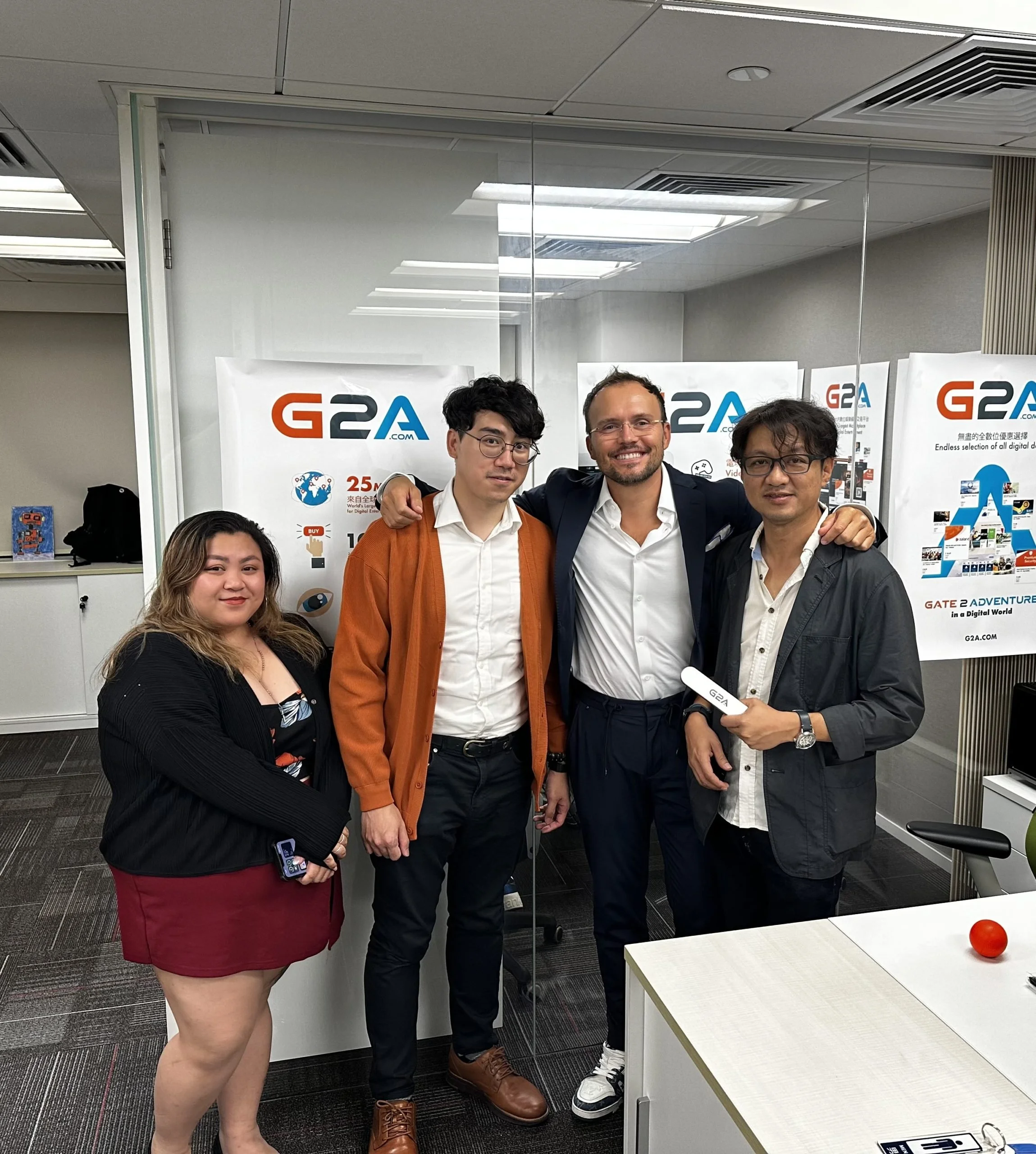
Listen to the full conversation with Bartosz Skwarczek on Apple Podcasts.