Eugene Kang grew up watching his parents run gas stations and convenience stores across Southern California after they immigrated from South Korea. As a kid, he was the one stocking shelves and watching what made customers pick one brand over another — an early, unglamorous education in branding that he’d later point back to when explaining why he understood packaging and shelf presence before he understood meat processing.
In 2011, as a political science student at UC Riverside, Eugene took a road trip to the Grand Canyon with his aunt Susan. At a roadside stand along the way, he tried jerky made by Celestino “Charlie” Mirarchi, an octogenarian butcher who had been supplying Southern California roadside stands out of a small San Bernardino facility since 1977. The jerky was good — good enough that Eugene and his aunt tracked Mirarchi down afterward. Mirarchi’s own children weren’t interested in taking over the business, and the timing lined up: Eugene and Susan bought the company later that year. Sales at the time were around $360,000 annually, built entirely on private-label production for other brands rather than a business with its own identity.
Eugene dropped out of college to run it. He had zero experience in food manufacturing, so he spent his first year working directly under Mirarchi, learning the physical craft of jerky-making before he ever touched a marketing plan. From there, the next several years were what Eugene has since called “13 years of trial and error” — building out USDA-compliant operations as a first-time founder, learning meat processing regulation from scratch, and slowly turning a private-label operation into a real branded product under the name Country Archer.
One of the clearest breakthroughs came in 2014, when Archer struck a licensed partnership with Huy Fong Foods — the maker of the iconic rooster-bottle Sriracha — to create a Sriracha-flavored jerky. The flavor gave Archer a hook that retail buyers hadn’t seen before, and it became a meaningful part of how the brand broke into shelves that had previously turned the company down. By 2016, Archer was in roughly 3,250 store locations. Revenue hit $21 million in 2017 and $33 million in 2018, the same year the company landed on the Inc. 5000 list of fastest-growing private companies in America. In 2019, Eugene was named to Forbes’ 30 Under 30 list in the Food & Drink category, and Archer landed a Costco launch with its Original Beef Mini Sticks.
Growth capital came from Monogram Capital Partners, which first invested in 2016 and has put roughly $30 million into the company across multiple rounds over seven years. That capital helped fund manufacturing capacity and the kind of retail expansion that took Archer into major chains including Target, Whole Foods, Kroger, Publix, Safeway, Sprouts, Walmart, Wegmans, Harris Teeter, and Albertsons, along with hospitality and travel accounts like Starbucks, AMC, REI, Hilton, and Marriott.
The brand itself evolved too. In 2020, Country Archer Jerky Co. became Country Archer Provisions, reflecting an updated recipe and positioning. Then in March 2025, at Natural Products Expo West, the company simplified further — dropping “Country” and “Provisions” entirely to become just Archer, with a new orange-and-navy identity built for a broader meat-snacks category than jerky alone.
That category expansion has been central to the company’s more recent growth. Meat sticks — not traditional jerky — have become the engine behind Archer’s numbers: in 2026, the category posted year-over-year growth of roughly 35.9% against an overall snacking category growth of 8.8%, with Archer’s own meat stick sales up 57.7% and the brand ranking #5 in the category. The company has reported sales approaching $200 million in 2024 with roughly 90% year-over-year growth, and has been tracking toward $300 million in 2025 across more than 30,000 retail locations, with 2026 guidance pointing toward $500 million or more in sales.
The company has also been investing heavily in physical infrastructure to support that growth. In November 2025, Archer opened a second Los Angeles-area manufacturing facility with capacity for more than 36 million pounds of product a year — enough to produce over a billion mini meat sticks annually. In February 2026, Archer secured a credit facility worth nearly $100 million from JPMorgan Chase specifically to fund that kind of manufacturing expansion.
In this conversation, Eugene breaks down the operational grind of turning a private-label jerky operation into a national meat-snacks brand, what it actually took to learn USDA compliance and food manufacturing from zero industry experience, and how a chance encounter with an 80-year-old butcher on a road trip to the Grand Canyon turned into a company now scaling toward half a billion dollars in annual sales.
Listen to the full conversation with Eugene Kang on Apple Podcasts
Cameron Nagle is the founder and host of Starting Small, creator of the Starting Small Summit, and author of Starting Small: The Raw Truth About Entrepreneurship and the American Dream. About Cameron | Listen on Apple Podcasts
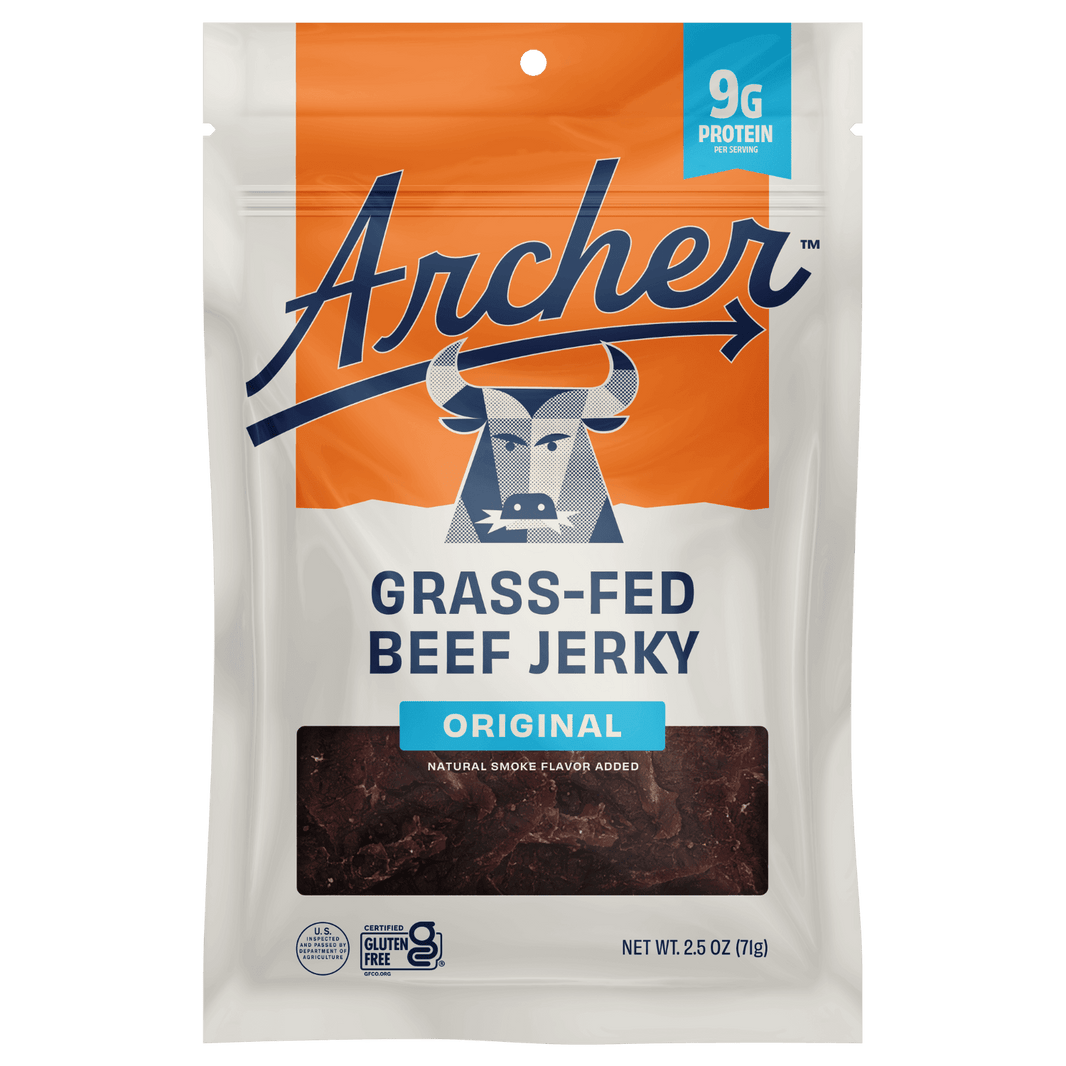
Make sure to check out Archer at: https://archerjerky.com/
Check out my new book on Amazon: https://amzn.to/4kRKGTX
Sign up for Starting Small University to join our interviews LIVE and ask questions: https://startingsmallmedia.org/startingsmalluniversity
Visit Starting Small Media: https://startingsmallmedia.org/
Subscribe to exclusive Starting Small emails: https://startingsmallmedia.org/newsletter-signup
Follow Starting Small:
Instagram: https://www.instagram.com/startingsmallpod/
Facebook: https://www.facebook.com/Startingsmallpod/
LinkedIn: http://linkedin.com/in/cameronnagle