Forbes Functions: How Cameron Forbes Built a Luxury Event Planning Business From a $10K Investment
Cameron Forbes spent years building experiences for other people’s brands before she ever thought about building her own. A Duke University graduate, she cut her teeth at LaForce, a fashion and lifestyle public relations agency, before landing an experience-design role at Bank of America — a job that, in the middle of the COVID-19 pandemic, gave her a front-row seat to how quickly consumer expectations around events and gatherings were shifting. When the world reopened, she saw an opening that most people missed: a market for elevated, design-forward event production that didn’t require the six-figure minimums of a traditional luxury planning firm.
Forbes Functions launched in June 2022 with roughly $10,000 of Cameron’s own savings — enough for a website, a small inventory of rental tableware, and the first few client deposits. For about nine months she ran the business alongside her full-time job, taking calls during lunch breaks and building out mood boards at night, before the volume of inbound requests made the decision for her: she left corporate life behind and went all-in on Forbes Functions full-time.
The name is not an accident. Forbes Functions is a wink at both her own last name and the idea of “functions” in the literal sense — the parties, activations, and gatherings the company designs and produces. From the outset, Cameron positioned the company at the intersection of event planning and set design: rather than simply coordinating vendors, Forbes Functions builds custom tablescapes, installations, and branded environments that look more like editorial photo shoots than typical corporate events.
The company’s signature offering is a product line called “Ours at Yours,” a curated tablescape and event-styling rental service that lets clients bring Forbes Functions-designed table settings, linens, glassware, and decor into their own homes or venues without committing to a full-scale event production. It is a smart middle tier: less expensive than hiring a full planning team, more elevated than a big-box party rental, and it has become one of the company’s most requested services for dinner parties, bridal showers, and small celebrations.
Since going full-time, Cameron has grown Forbes Functions into a business that produces somewhere between 40 and 50 events a year, according to figures she has shared publicly — everything from intimate dinners for a handful of guests to brand activations designed to be photographed and shared across social media. She has reported that close to 30 percent of her clients are repeat business, a signal that the company’s design work is resonating enough to bring people back for their next celebration rather than shopping around. Cameron has also cited year-over-year revenue growth in the range of 250 percent since the company’s early days, though as with most founder-reported figures, that number reflects self-reported growth from a small early base rather than audited financials, and should be read as directional rather than precise.
Part of what has fueled that growth is a client roster that reads like a who’s-who of buzzy, design-conscious brands and personalities. Forbes Functions has produced activations and events for HAMPTON WATER, the rosé label co-founded by Jon Bon Jovi and his son Jesse Bongiovi; Baked by Melissa, the bite-size cupcake brand that has become a fixture of New York City food culture; and event and content work connected to personalities like Serena Kerrigan, Ilana Glazer, and Jake Shane. For a company built on a five-figure bootstrap budget, landing recognizable names like these within a few years is a meaningful signal of the design quality and word-of-mouth reputation Cameron has built.
Cameron has been candid about the fact that event planning is a notoriously difficult business to scale. Unlike a product company, where a single design can be manufactured and sold thousands of times, every Forbes Functions project is bespoke — a new venue, a new guest list, a new set of logistics to coordinate around florists, rental companies, caterers, and venues, often on compressed timelines. That reality shapes how she has grown the business: rather than chasing headcount for its own sake, she has built a lean core team supplemented by a trusted bench of freelance stylists, florists, and production assistants who can flex up or down depending on the size and complexity of a given event.
Forbes Functions also sits inside a genuinely large and growing industry. The global events industry, which spans everything from corporate conferences to weddings and private celebrations, was valued at well over $1 trillion in recent years, and the luxury segment specifically — high-end weddings, brand activations, and private events — has been estimated at tens of billions of dollars annually in the United States alone. Social media has only accelerated demand in that segment: brands and individuals increasingly treat events as content opportunities, which means the visual design of a party or activation now matters as much as the guest experience itself. That shift plays directly to Cameron’s strengths as a former experience designer, and it is a large part of why Forbes Functions’ aesthetic-forward approach has found traction so quickly.
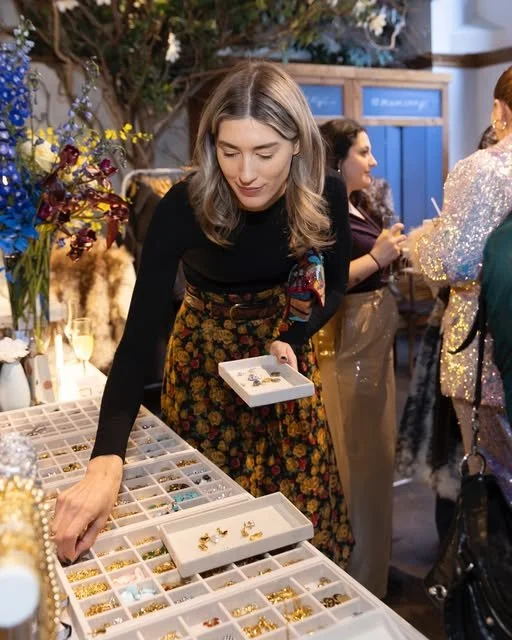
On the podcast, Cameron talked candidly with host Cameron Nagle about what it actually takes to run a company where the product is an experience rather than a physical good, and where every client relationship starts with a blank page. She shared how she prices and structures projects to protect her margins in an industry known for scope creep, how she vets and builds trust with a rotating cast of vendors and freelancers, and what she has learned about turning a single successful event into repeat business and referrals rather than one-off transactions.
She also spoke about the emotional side of building a company around her own name and aesthetic point of view — the vulnerability of putting out a product that is, in many ways, an extension of her own taste, and the pressure that comes with every event being a live, unrepeatable performance where there is no opportunity for a do-over if something goes wrong on the day. That high-stakes, one-shot nature of live events is part of what makes the business simultaneously exhausting and, according to Cameron, deeply rewarding: when a room comes together exactly as she envisioned it, the payoff is immediate and visible in a way that few other businesses offer.
Looking ahead, Cameron has talked about scaling Forbes Functions in ways that don’t rely purely on adding more one-off events to her calendar. The “Ours at Yours” rental line is itself a step in that direction — a semi-productized offering that can generate revenue without demanding the same day-of labor as a full-scale production. She has also discussed the possibility of licensing her design sensibility into products, partnerships, and collaborations with the brands she already works alongside, a natural next step for a founder whose core asset is a recognizable aesthetic point of view rather than a piece of physical inventory.
Cameron’s path also offers a useful counterpoint to the popular image of the “overnight” events entrepreneur. She did not leave a stable job to chase a passion project with no plan; she spent years in adjacent industries — public relations and corporate experience design — that gave her both a creative point of view and a practical understanding of budgets, client management, and brand storytelling before she ever took on her first paying event client. That background is part of why Forbes Functions has been able to work with sophisticated consumer brands almost from the start: Cameron speaks the language of brand marketing as fluently as she speaks the language of florals and tablescapes, which makes her a more natural partner for a company like HAMPTON WATER or Baked by Melissa than a planner coming purely from a wedding-industry background might be.
For anyone thinking about starting a business in event planning, design, or another highly bespoke service industry, Cameron’s story is a reminder that a small initial investment and a full-time job can coexist with building something real — as long as there is a clear enough point of view to differentiate from the start. Forbes Functions did not win clients like HAMPTON WATER and Baked by Melissa by being the cheapest option or the most established name in the room; it won them by having a distinct aesthetic and a founder willing to put her own name and taste on the line, event after event, until the work started speaking for itself.
Listen to the full conversation with Cameron Forbes on Apple Podcasts.