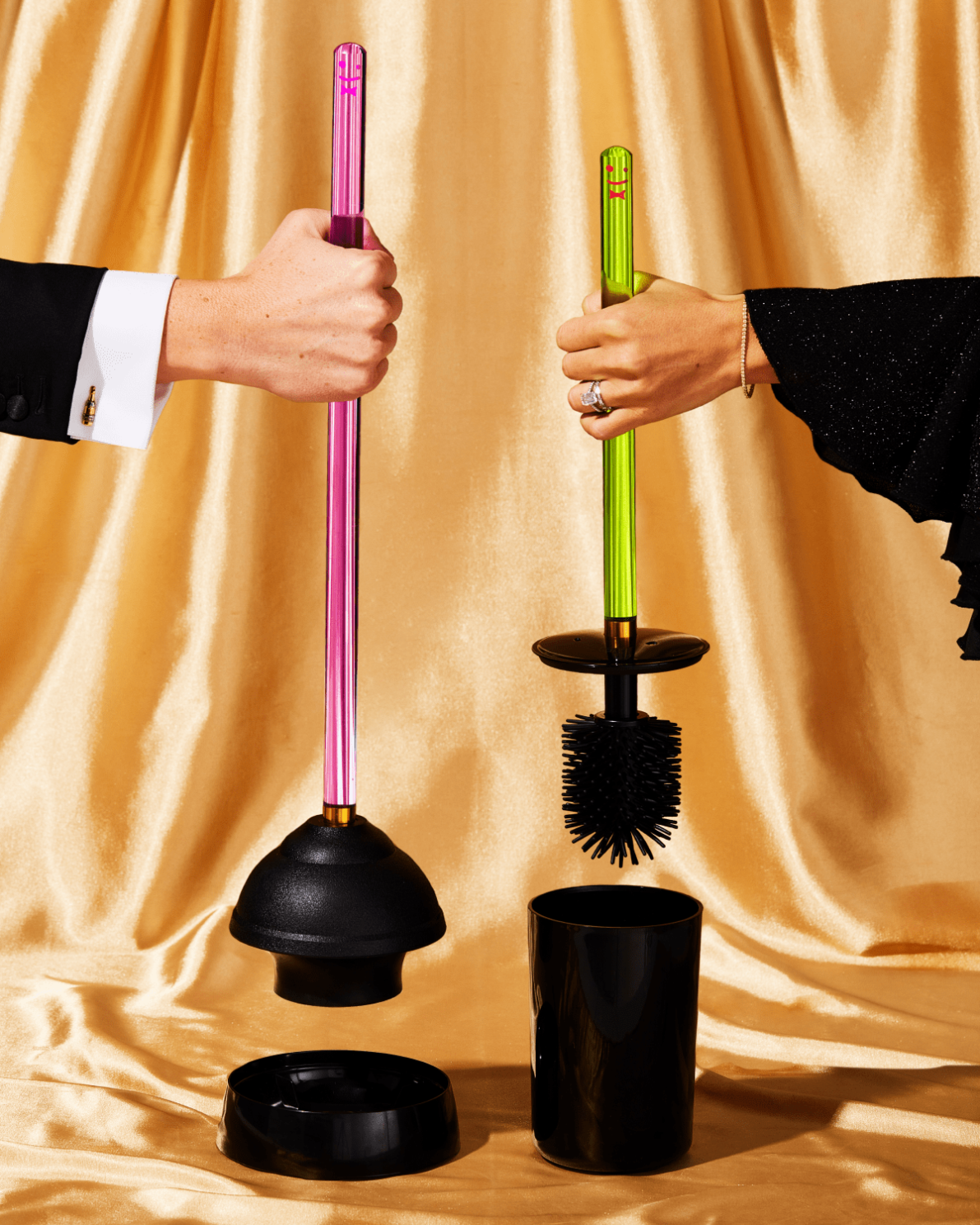
Staff: How Charlie Weisman Turned the Plunger Into a Design Object
Charlie Weisman spent most of his career in advertising before he ever thought about designing a household product. After graduating from George Washington University’s School of Business, he started on the account side at an ad agency in New York, spent a stretch as a Guinness World Records judge helping brands organize and officiate record attempts, and later moved to a second agency doing business development. None of that experience touched manufacturing, product design, e-commerce, or supply chain — the skills he would eventually need to build a physical consumer goods company from scratch.
The idea for Staff came together during COVID-19 lockdown, around the fifth month of isolation in his small apartment on New York’s Lower East Side. Weisman noticed something strange: nearly every object in his apartment had been designed with some care except for the plunger, which sat tucked behind the toilet, deliberately ugly and built to disappear rather than to be seen. He wondered why a household essential — something almost everyone owns — had to look that way, and he had a personal connection to the category besides: his grandfather had spent his career as a plumber. Staff launched in March 2021 with two products, a redesigned plunger and a set of hangers, both built around bold, translucent colored acrylic and a signature smiley-face character that has since become the brand’s visual identity across its whole product line.
Staff was entirely self-funded from the start, and Weisman has been consistent across interviews that the company has never raised outside venture capital. He has described his initial personal investment loosely, as roughly what it would cost to buy a compact car, rather than disclosing an exact dollar figure, and neither he nor the company has released specific revenue numbers, funding totals, or employee counts in any interview or press coverage found. What is consistent across founder interviews is that demand arrived quickly — retail partnerships reportedly followed within the first few weeks of launch, and the plunger sold well enough in its first several months that Weisman was able to grow the line into new categories without needing outside capital. The product catalog has since expanded well beyond the original plunger and hangers to include a toilet brush, oven mitts, a turkey baster, a lint roller, tongs, garbage bags, and a mop, each rendered in the same colorful, translucent, smiley-branded design language.
Staff sells directly to consumers online and through wholesale relationships with independent boutiques, department stores like Bloomingdale’s, and retailers like Urban Outfitters, according to interviews with Weisman. The brand also lists a number of media placements on its own site and product pages, including appearances tied to The Drew Barrymore Show, Apartment Therapy, Domino, Fast Company, and GQ, along with two design honors: Architectural Digest’s “Cleverest Awards” and a “Best Toilet Brush” recognition from Better Homes & Gardens’ Clean House Awards. Those accolades are listed on Staff’s own product pages rather than confirmed directly through the awarding publications in this reporting, so they should be read as brand-reported rather than independently verified. Products typically run in the $20 to $35 range for signature items like the plunger, positioning Staff as an affordable design purchase rather than a luxury home good — closer to a fun, gift-able impulse buy than a major household investment.
On the podcast, Weisman talked about the specific challenge of building a physical product company with a purely creative and marketing background — sourcing manufacturers, navigating injection molding and acrylic production, and building an entire supply chain from zero, all while working solo out of a small apartment. He also discussed the deceptively hard part of Staff’s pitch: convincing retailers, media, and eventually consumers to take a redesigned plunger seriously as a legitimate design object rather than a novelty gag gift, a perception hurdle that took real work to clear before outlets like Architectural Digest and Better Homes & Gardens started including the brand in their own design coverage.
Staff is a useful reminder that a genuinely novel business idea doesn’t have to come from a new technology or an unmet market gap in the traditional sense — it can come from simply looking harder at a category everyone has ignored. Weisman didn’t invent a new type of product; he applied design thinking and DTC branding to an object so mundane that almost nobody had ever bothered to make it good-looking, and turned that overlooked corner of the home goods aisle into a real, self-funded, multi-product business built without a single dollar of outside investment. Whether that scrappy, bootstrapped approach can keep scaling as the product line grows remains the open question, but the fact that a plunger became a design-award-winning object at all is itself the more improbable part of the story.