Nicole Bentler is the founder of Pocono Mountain Maple, a 450-acre certified organic maple farm in Greene Township, in Pennsylvania’s Pocono Mountains, and the woman behind Pocono Maple Water — a lightly sweet, mineral-rich water tapped straight from maple trees each spring, before it’s ever boiled down into syrup. The land itself has been farmed for more than 200 years, but the farm as it exists today, and the packaged consumer product built on top of it, is entirely Nicole’s doing.
A Pocono native, Nicole spent the first stretch of her career far from agriculture. She started out in corporate sales for a fitness company in Philadelphia, then moved to South Florida to join the opening team of a boutique indoor-cycling studio as it expanded nationally, eventually managing its day-to-day operations and P&L as studio manager. About seven years ago, while looking for a small summer home back in the Poconos, she found the 450-acre property instead — and decided to buy the farm, not the cabin.
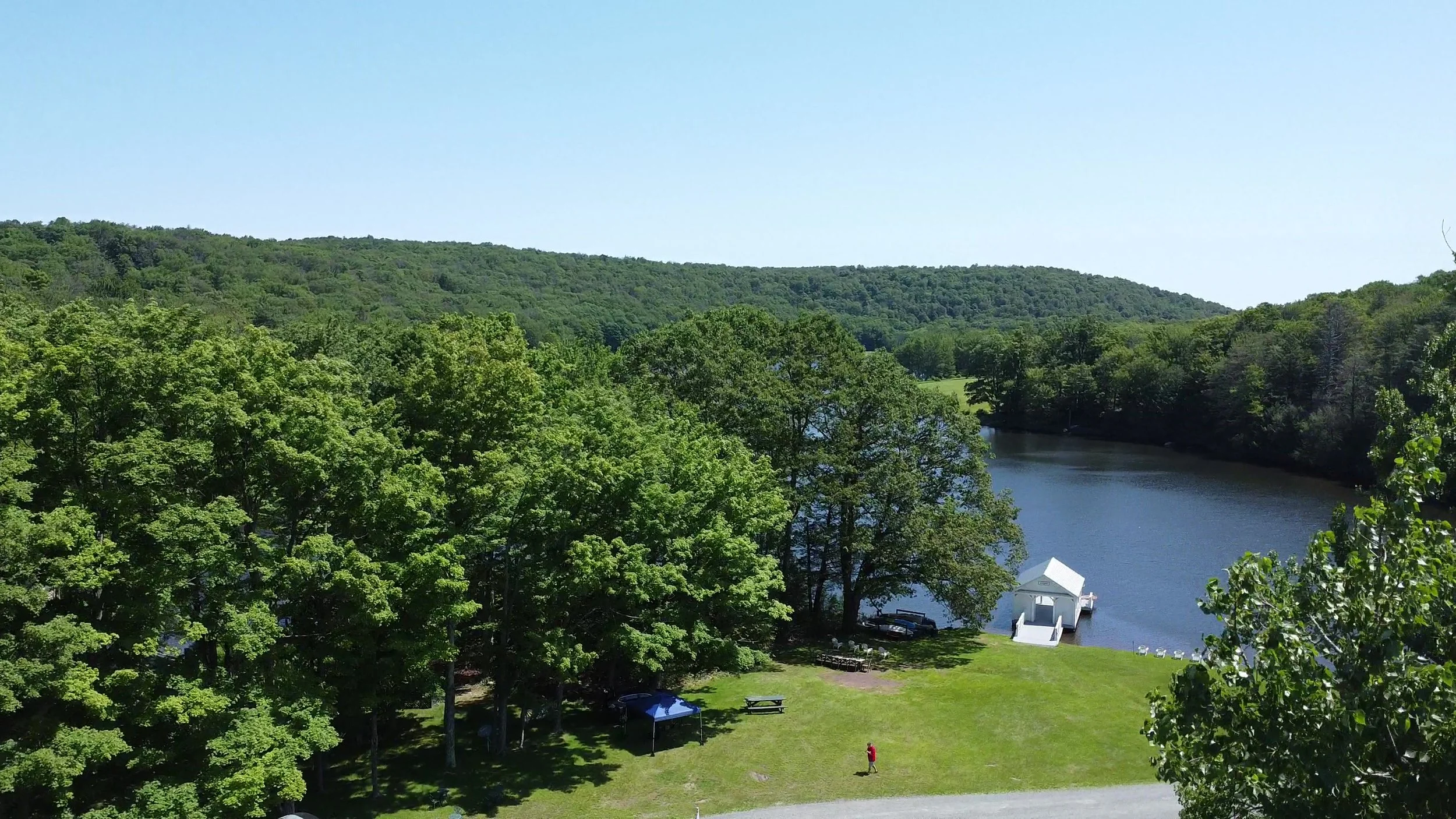
What Nicole found wasn’t a boutique hobby farm. Today the property runs an orchard, horse stables, hiking trails, a lake, and a small campground with cabins, alongside the working sugarbush — she’s built it into an agritourism destination that hosts seasonal experiences, farm dinners, and even weddings, in addition to producing maple syrup and, more recently, Pocono Maple Water. It’s described as one of the few female-owned-and-operated maple farms in the country, and one of the largest organic maple operations in the Northeast.
The tapping itself is manual and seasonal in a way that most people who’ve only ever bought a bottle of syrup at the grocery store don’t realize. Each tree is tapped by hand and connected to a vacuum-fed tubing system — the farm now runs hundreds of miles of tubing through the woods — and the entire harvest happens in a single narrow window, roughly three to six weeks each spring, when freezing nights and thawing days force sap up through the trunk. Farm staff can walk close to ten miles a day checking lines for leaks during that stretch. Outside that window, there’s no more sap to collect until the following year, which is part of what makes the timing of a maple business so unforgiving.
Her work with traditional syrup and sap eventually led her to maple water’s deeper potential. Unlike syrup, which is boiled down until roughly 98% of the water evaporates and only concentrated sugar remains, maple water is the raw sap itself — lightly filtered and bottled, with only a fraction of syrup’s sugar content, along with naturally occurring potassium, manganese, and antioxidants. It’s a single-ingredient product: no additives, no added sugar, no carbonation. Pocono Maple Water launched as its own consumer brand in 2025, positioned less as a novelty and more as a genuine alternative to coconut water and sports drinks in the natural-hydration category, and in 2026 it earned lab certification extending its shelf life from 12 to 18 months — a small technical detail that matters enormously for a seasonal product trying to sit on shelves year-round.
The farm has scaled its tapping considerably in recent seasons, moving from roughly 15,000 trees tapped a few years ago to over 22,000 certified organic, kosher maple trees today, a jump that tracks with the launch of the packaged water business. Even so, this remains a small, tightly run operation — the company’s own team is closer to a handful of employees than a large workforce, which is part of the point: sap only flows for three to six weeks a year, so scaling has to come from getting more out of each harvest window rather than simply hiring more people. Pocono Maple Water currently sells direct-to-consumer online, alongside a growing wholesale push into boutique hotels, wellness spaces, natural grocers, and cafes across the Northeast, and in June 2026 the brand is set to exhibit at BevNET Live, one of the beverage industry’s main trade shows for emerging, functional drink brands — the same circuit that’s introduced better-known category peers like coconut and birch water.
The timing is notable for reasons beyond the beverage aisle. The global maple syrup market is projected to grow from roughly $1.75 billion to more than $3 billion by the early 2030s, and the smaller maple water category is projected to roughly double over a similar stretch — but the industry is also facing a real, documented threat from a warming climate. Maple sap only runs during freeze-thaw cycles, and researchers have projected yield losses of up to 15% in major maple-producing regions by 2050 as those cycles become less reliable. That makes an operation like Pocono Mountain Maple, which has invested in vacuum tubing and modern harvest infrastructure to get more out of an increasingly unpredictable season, a useful case study in how a very old agricultural product is adapting to a changing climate in real time.
For Nicole, the throughline from boutique fitness studios to a 450-acre maple farm isn’t as strange as it sounds — both are businesses built on getting people to trust a product with their health, at a premium price, based on transparency about what’s actually in it. She’s said maple syrup is one of the cleanest sources of sugar available, next to honey, and the same pitch underpins the water: it’s exactly what came out of the tree, nothing else added. Whether that’s enough to build a national beverage brand out of a few unforgiving weeks each spring is still playing out, but Nicole has already turned a family maple stand most people would have kept as a hobby into one of the larger organic maple operations in the Northeast.
Listen to the full conversation with Nicole Bentler on Apple Podcasts
Cameron Nagle is the founder and host of Starting Small, creator of the Starting Small Summit, and author of Starting Small: The Raw Truth About Entrepreneurship and the American Dream. About Cameron | Listen on Apple Podcasts